
Sep 7, 2026Buying Guides
How to Clean Commercial Patio Umbrella Canopies Without Damaging the Fabric
Learn how to clean commercial patio umbrella canopies safely, remove dirt and mildew, protect printed graphics, and know when replacement is better.
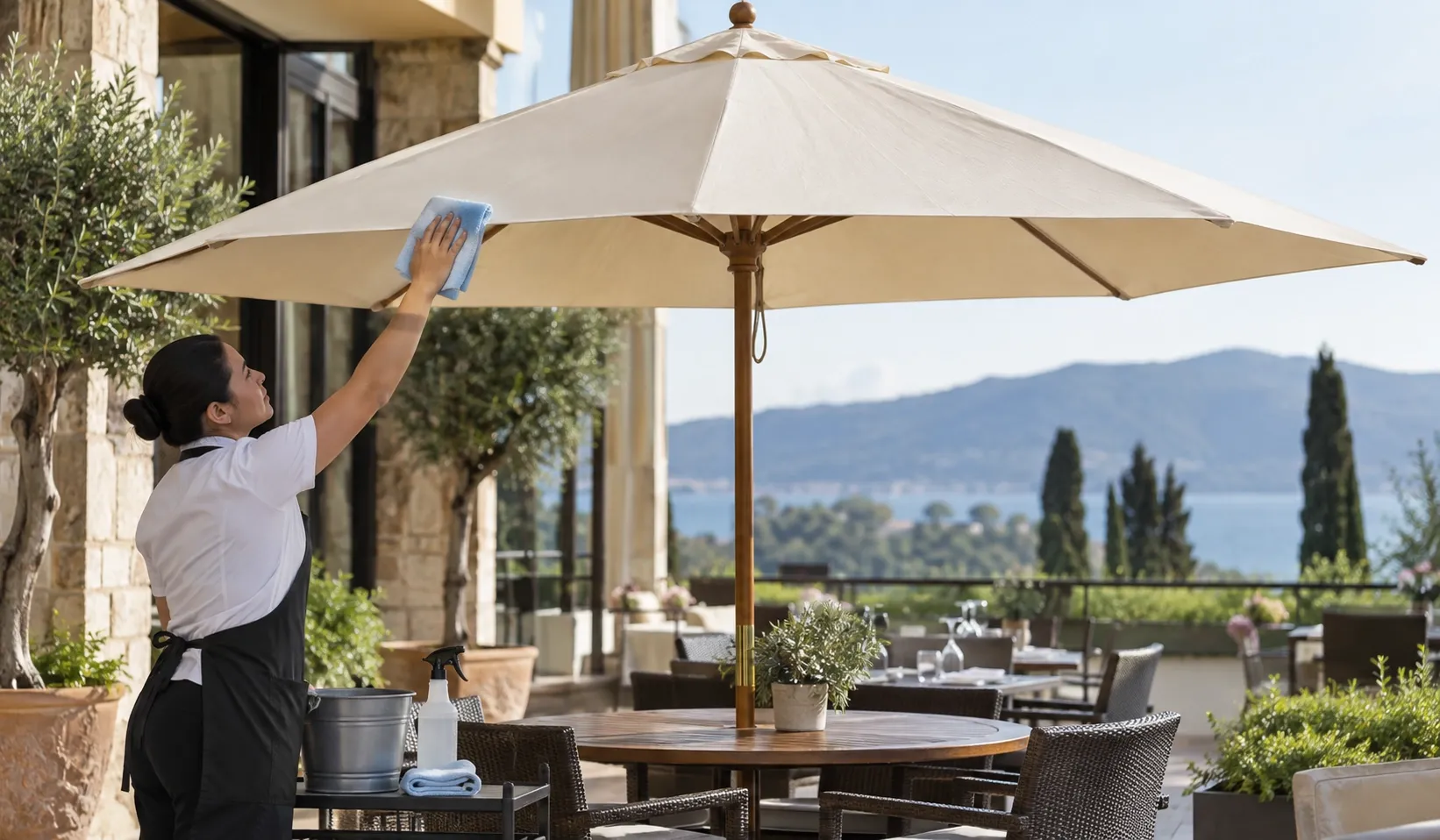
How to Clean Commercial Patio Umbrella Canopies Without Damaging the Fabric
Commercial patio umbrellas are exposed to dust, pollen, food residue, bird droppings, rain, humidity, and daily handling.
For restaurants, hotels, resorts, cafés, and other hospitality venues, a dirty canopy does more than affect appearance. Embedded dirt can make future cleaning more difficult, contribute to mildew growth, and shorten the useful life of an otherwise serviceable canopy.
The safest approach is to clean regularly and follow the instructions for the specific umbrella fabric.
Different polyester, solution-dyed polyester, acrylic, coated fabrics, and printed canopies may have different cleaning limitations.
Quick Answer: What Is the Safest Way to Clean an Outdoor Umbrella?
For routine cleaning, a good general process is:
- Brush away loose dirt.
- Rinse the canopy with clean water.
- Use a mild soap solution recommended for the fabric.
- Clean gently with a soft cloth, sponge, or soft-bristle brush.
- Rinse thoroughly until no soap remains.
- Allow the canopy to air-dry completely before closing or storing it.
Do not automatically use bleach, strong solvents, hard brushes, or pressure washers.
Those methods may be acceptable for certain fabrics under specific manufacturer instructions, but they can damage coatings, printed graphics, water-resistant finishes, or color on other materials.
For example, Sunbrella's official care guidance recommends mild soap, a soft-bristle brush, thorough rinsing, and air drying for routine umbrella cleaning.
1. Remove Loose Dirt Before Adding Water
Start while the canopy is dry.
Use a soft brush or clean cloth to remove:
- Dust
- Dry leaves
- Pollen
- Sand
- Loose organic debris
This step prevents dry particles from being rubbed deeper into the fabric during washing.
For commercial venues, quick routine cleaning is often more effective than waiting until the canopy requires a major deep clean.
Restaurants located near busy roads, trees, coastlines, or construction areas may need more frequent cleaning than protected hotel courtyards.
2. Use Mild Cleaning Products First
For most routine dirt, begin with the mildest suitable cleaning method.
Use clean or lukewarm water together with a mild soap that is compatible with the fabric.
Apply the solution gently and allow it enough time to loosen the dirt rather than scrubbing aggressively.
Pay particular attention to:
- Canopy seams
- Rib pockets
- Valances
- Areas around the center hub
- Fold lines
- Lower canopy edges
These areas can collect dirt because water and debris naturally move toward seams and edges.
After cleaning, rinse the entire treated area thoroughly. Soap residue left on outdoor fabric can attract more dirt and create visible marks.
3. Be Careful With Mold and Mildew
Mold or mildew is often associated with moisture, dirt, organic residue, and poor drying conditions.
If mildew appears, first identify the fabric before choosing a treatment.
Some solution-dyed acrylic fabrics allow diluted bleach cleaning under manufacturer instructions. For example, Sunbrella provides a bleach-and-mild-soap method for stubborn mildew on specified fabrics.
That does not mean bleach should be used on every commercial umbrella canopy.
For polyester, coated fabrics, printed umbrellas, or an unknown material, confirm the supplier's care instructions first.
A safer purchasing question is:
“What cleaning chemicals are approved for this exact canopy fabric?”
rather than assuming all outdoor fabrics can be treated in the same way.
4. Printed and Branded Canopies Need Extra Care
Commercial umbrellas with logos or full-canopy graphics may require a more conservative cleaning method.
Aggressive brushing can damage printed surfaces or lift graphic edges. Strong solvents may also affect inks, transfers, coatings, or vinyl graphics.
Avoid pressure washing unless the fabric supplier specifically approves it.
Sunbrella's instructions for its graphic fabrics specifically advise against power washing, vigorous abrasive cleaning, and harsh solvents around graphics.
For a branded restaurant or beverage umbrella, it is therefore important to confirm both:
fabric cleaning requirements and printing-method cleaning requirements.
The underlying fabric may tolerate a chemical that the printed logo does not.
5. Always Dry the Canopy Before Closing or Storage
One of the simplest maintenance rules is also one of the most important:
Do not store a wet umbrella for extended periods.
After cleaning, leave the canopy fully open in suitable conditions until it is completely air-dried.
Closing a damp canopy traps moisture between folded fabric panels and can contribute to odor, staining, or mildew.
For seasonal storage:
- Clean the canopy first.
- Allow it to dry completely.
- Inspect seams and rib pockets.
- Check the frame for corrosion or damaged hardware.
- Store the umbrella in a clean, dry, ventilated area.
A protective cover is useful only if it does not trap moisture inside.
6. What Should You Avoid When Cleaning a Commercial Umbrella?
Common cleaning mistakes include:
- Using a pressure washer too close to the fabric
- Scrubbing with a hard brush
- Applying bleach without confirming fabric compatibility
- Using acetone or strong solvents on printed graphics
- Machine-washing a canopy without supplier approval
- Closing the umbrella while it is still wet
- Ignoring small stains until they become deeply embedded
The goal is not to make the canopy look new in one aggressive cleaning session.
For commercial use, regular gentle maintenance is usually better than infrequent harsh cleaning.
7. When Should the Canopy Be Replaced Instead of Cleaned?
Cleaning cannot solve every problem.
Consider replacing the canopy if it has:
- Severe permanent fading
- Tears around rib pockets
- Brittle or weakened fabric
- Failed seams
- Extensive coating damage
- Permanent staining that affects the venue appearance
- Repeated repairs in high-stress areas
If the aluminum or steel frame remains in good condition, a replacement canopy can often be more economical than replacing the complete umbrella.
This is one reason commercial buyers should ask about replacement canopy availability when selecting a new umbrella.
Commercial Umbrella Maintenance Checklist
For hotels, restaurants, and commercial operators, establish a simple routine covering:
- Regular removal of loose dirt
- Prompt treatment of food and drink spills
- Fabric-appropriate cleaning products
- Complete drying before closing
- Inspection of seams and rib pockets
- Inspection of ribs, hubs, ropes, cranks, and pins
- Seasonal deep cleaning
- Replacement canopy planning
Documenting the exact fabric reference also makes future cleaning and replacement easier.
Conclusion
Cleaning a commercial patio umbrella correctly starts with knowing the canopy material.
For routine care, gentle cleaning with clean water, mild soap, thorough rinsing, and complete air drying is a sensible starting point. Stronger chemicals should only be used when the exact fabric manufacturer or umbrella supplier confirms that they are appropriate.
Printed and branded umbrellas deserve additional care because cleaning must protect both the fabric and the graphic.
Regular maintenance can extend the useful life of a canopy, but when fabric is badly faded, torn, weakened, or permanently stained, replacing the canopy may provide better value than repeated cleaning.
Need Replacement Canopies or Easier-to-Maintain Commercial Umbrellas?
Send Snova Outdoor your umbrella photo or model, canopy size, quantity, application, fabric preference, delivery country, and branding requirements.
We can help you evaluate suitable commercial umbrella fabrics, replacement canopy options, or new center pole, cantilever, and large commercial umbrella configurations for restaurants, hotels, resorts, and outdoor furniture projects.