Sep 14, 2026Buying Guides
Outdoor Shade Trends 2026 | Hospitality Shade Guide
Explore 2026 outdoor shade trends and how hotels, restaurants and resorts are using commercial umbrellas to create more comfortable, flexible outdoor spaces.
Outdoor Shade Trends 2026: Why Shade Structures Matter for Hotels, Restaurants & Resorts
Outdoor shade is no longer being treated as an accessory added after the furniture is selected.
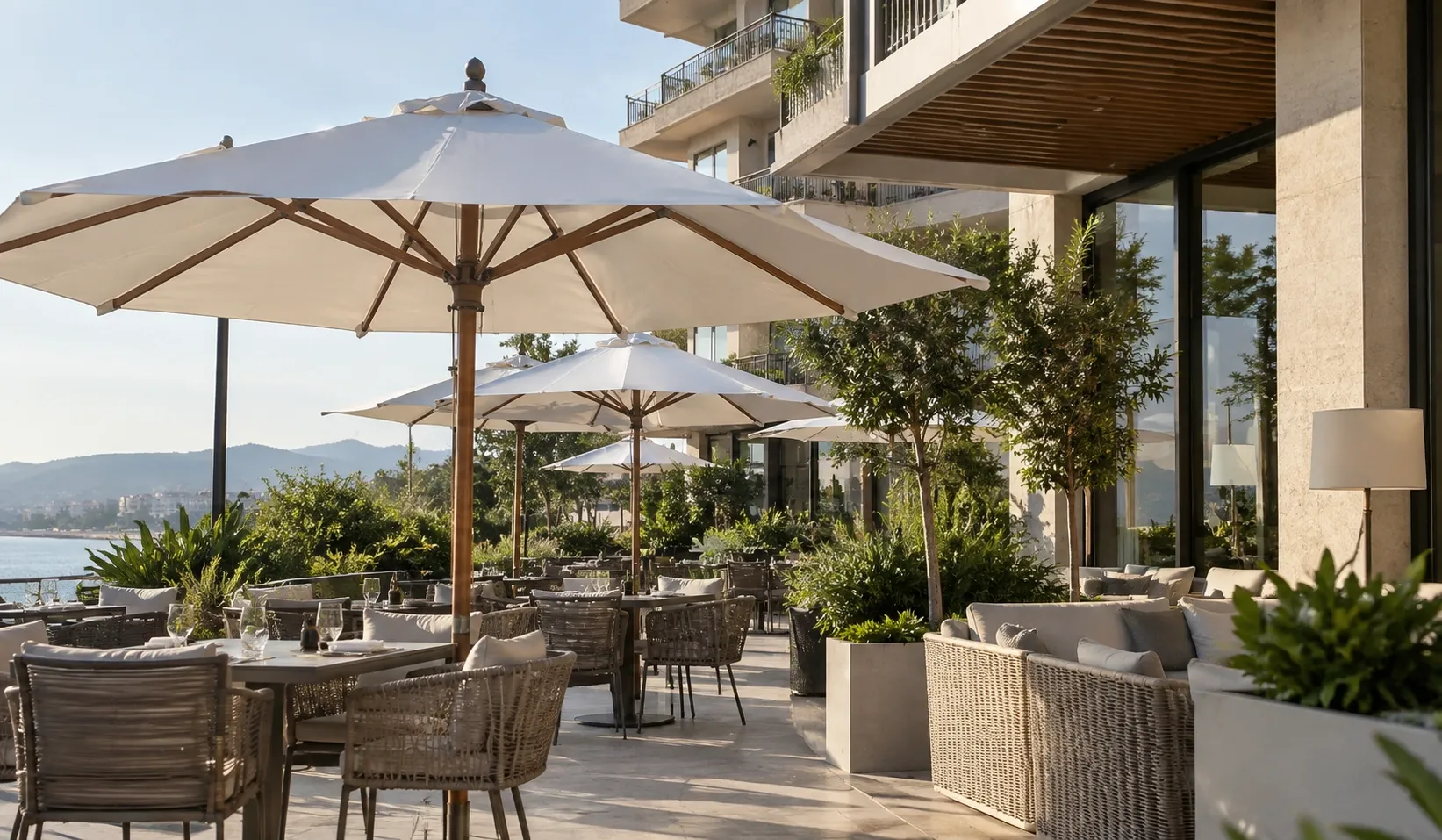
In 2026, shade structures are becoming a more important part of how outdoor spaces are planned, especially as restaurants, hotels, resorts and mixed-use developments invest more heavily in terraces, pool decks, courtyards and outdoor dining areas.
The 2026 U.S. Houzz Outdoor Trends Study found that the share of outdoor renovation projects incorporating shade structures increased by 15 percentage points to 35%. Although the study focuses on homeowners, the broader design direction is relevant to commercial hospitality as well: outdoor spaces are increasingly expected to function as comfortable, usable environments rather than decorative areas.
For hospitality buyers, the key question is therefore changing from:
“Do we need umbrellas?”
to:
“How should shade be integrated into the outdoor space?”
1. Shade Is Becoming Part of the Outdoor Layout
One of the clearest outdoor-design trends in 2026 is the idea of treating exterior space more like an indoor room.
Dining, lounging, circulation, lighting and shade are planned together instead of separately.
Industry commentary around 2026 outdoor design also points toward outdoor spaces functioning as complete environments, with shade helping define different zones. Professional parasols are increasingly being treated as architectural elements that establish rhythm, volume and perceived boundaries within terraces and hospitality spaces.
For a restaurant, this may mean using repeated center pole umbrellas to organize individual dining tables.
For a resort pool, cantilever umbrellas can create shaded lounger zones without placing poles directly between guests.
For a large hotel courtyard, larger commercial umbrellas may reduce the number of support posts while creating broader gathering areas.
The umbrella becomes part of the floor plan.
2. Outdoor Spaces Need to Work for More Hours of the Day
Shade directly affects how long an outdoor area remains comfortable and usable.
An unshaded restaurant terrace may be attractive in the morning but uncomfortable during peak afternoon sun. A poolside lounge area may remain empty during the hottest part of the day if guests have limited shade options.
Commercial umbrellas provide a flexible way to respond to these conditions because they can be positioned around specific activity zones.
Adjustable cantilever umbrellas may also offer rotation or tilt functions that allow staff to reposition shade as the sun moves.
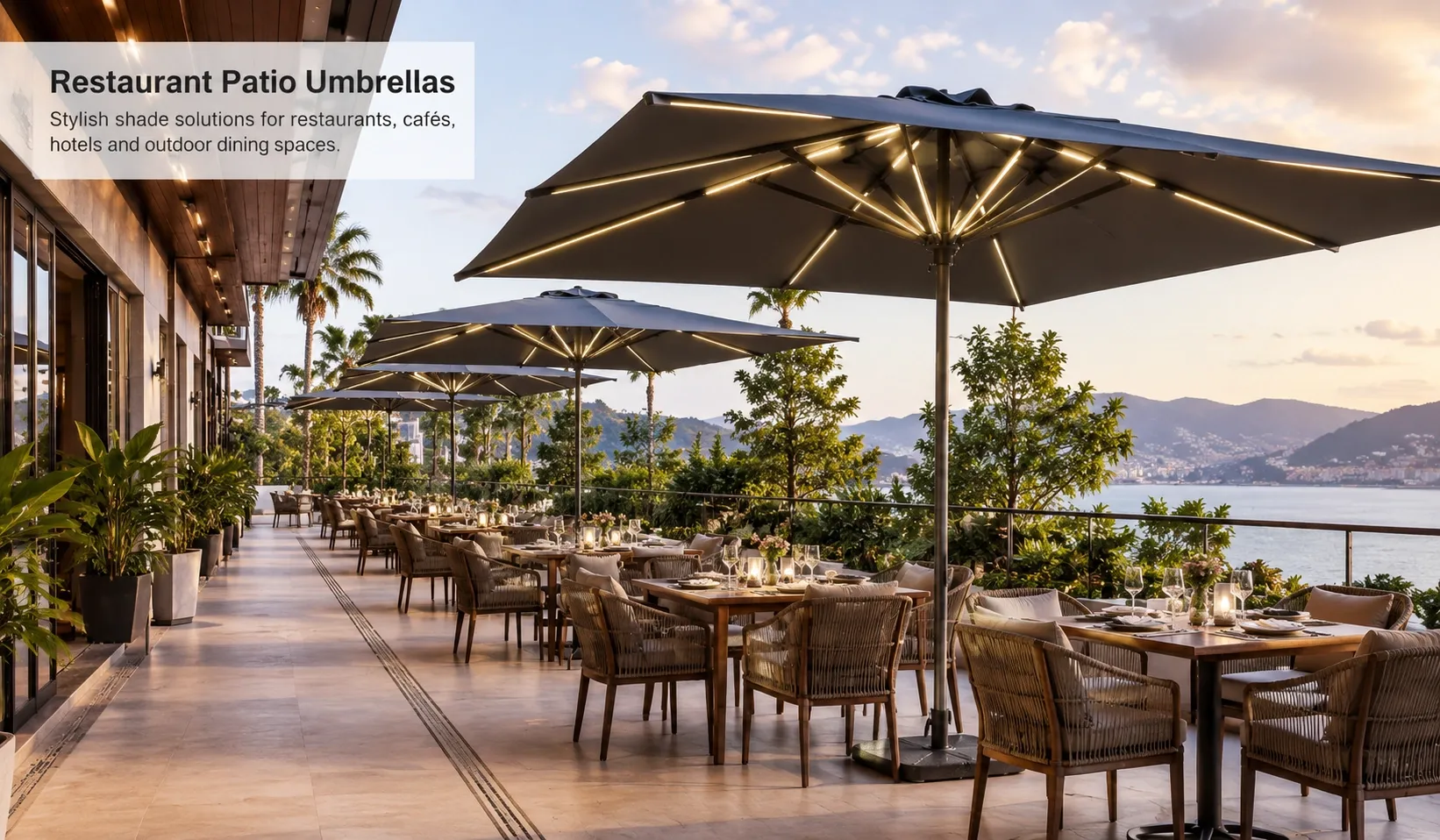
Some commercial umbrellas now incorporate integrated LED lighting, allowing the same structure to support evening ambience once sun protection is no longer required.
This reflects another broader 2026 outdoor trend: outdoor spaces are being designed for longer periods of daily use rather than a single function or time of day.
3. Flexible Shade Is Valuable for Hospitality Layouts
Permanent pergolas and architectural roofs have important applications, but they are not always the right solution for every part of a hospitality project.
Commercial umbrellas offer greater flexibility.
Tables may move. Outdoor furniture layouts may change between lunch and dinner. Hotels may reconfigure terraces for events. Resorts may need seasonal furniture arrangements.
A movable or modular umbrella system allows shade coverage to adapt with those changes.
This is especially useful for businesses that need to use the same outdoor area for different purposes.
A restaurant terrace, for example, might use smaller center pole umbrellas for normal daily service while reserving a larger cantilever or large commercial umbrella for communal tables or lounge areas.
Rather than asking which single umbrella is “best,” project buyers should think about building a coordinated shade system.
4. Large-Scale Shade Is Becoming More Architectural
Another noticeable direction is the increasing visual importance of large shade structures.
Large umbrellas are no longer selected only because they cover more square meters.
They can also become focal points.
Large center pole umbrellas, cantilever systems and multi-canopy structures can define dining zones, hotel entrances, plazas or resort gathering spaces.
In hospitality design, this matters because outdoor furniture and shade are visible parts of the guest experience.
Frame finish, canopy shape, fabric color and lighting should therefore coordinate with:
- Building architecture
- Furniture collections
- Landscaping
- Brand colors
- Outdoor lighting
- Guest circulation
A large umbrella that is technically suitable but visually disconnected from the project can still feel like an afterthought.
5. Customization Is Becoming More Important
As outdoor spaces receive more design attention, standard beige umbrellas are no longer the only solution buyers consider.
Commercial projects increasingly ask about:
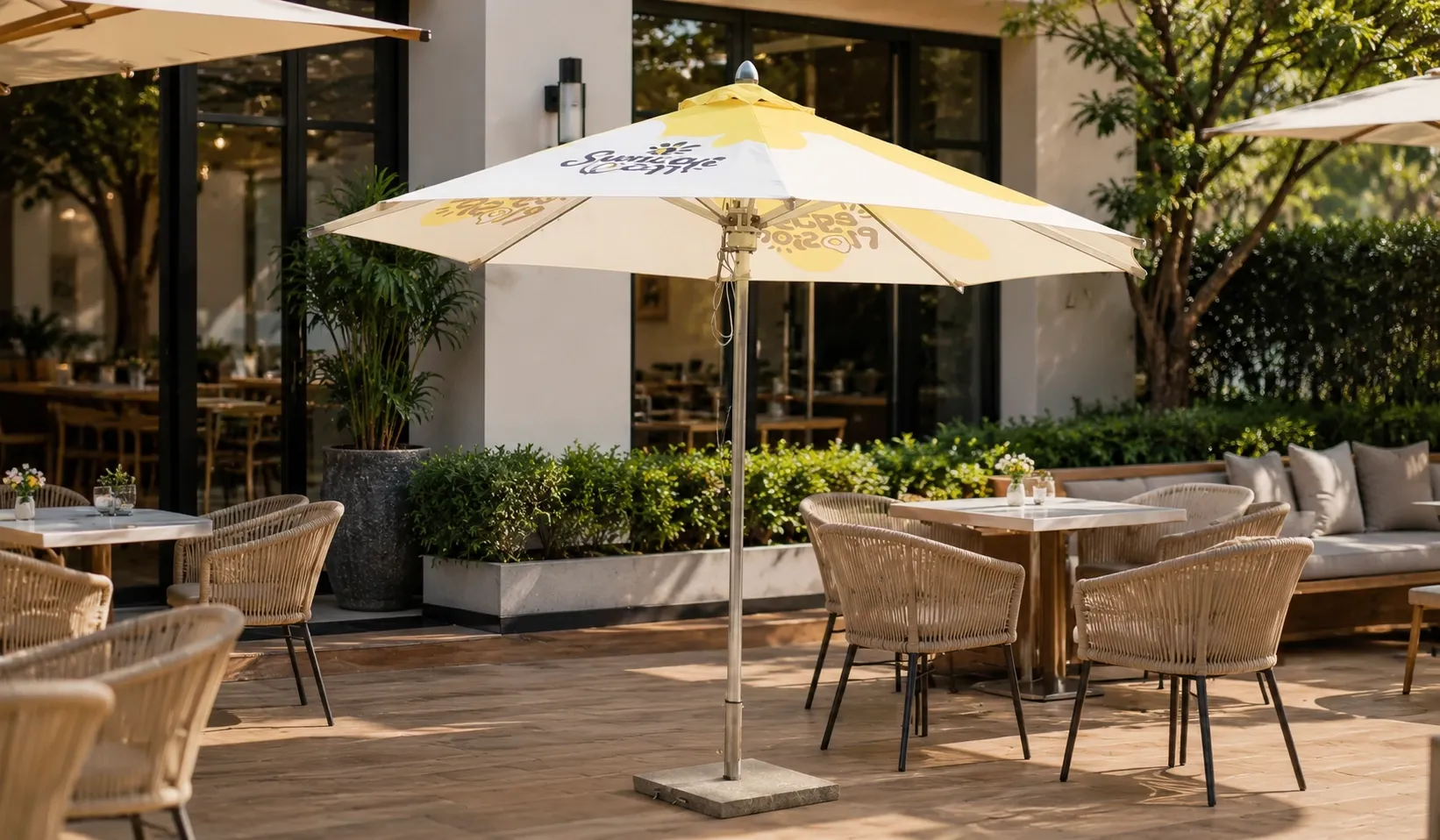
custom fabric colors, wood-look or powder-coated frames, logo printing, valances, integrated lighting, different canopy shapes and project-specific dimensions.
This does not mean every umbrella should be heavily customized.
For many premium hospitality projects, subtle customization is more effective.
A coordinated canopy color and frame finish may create a stronger result than covering the entire umbrella with branding.
For cafés, beverage brands and promotional hospitality environments, however, full canopy graphics or prominent logo printing may be appropriate.
The key is to match the level of customization to the space.
6. Buyers Are Looking Beyond the Initial Purchase Price
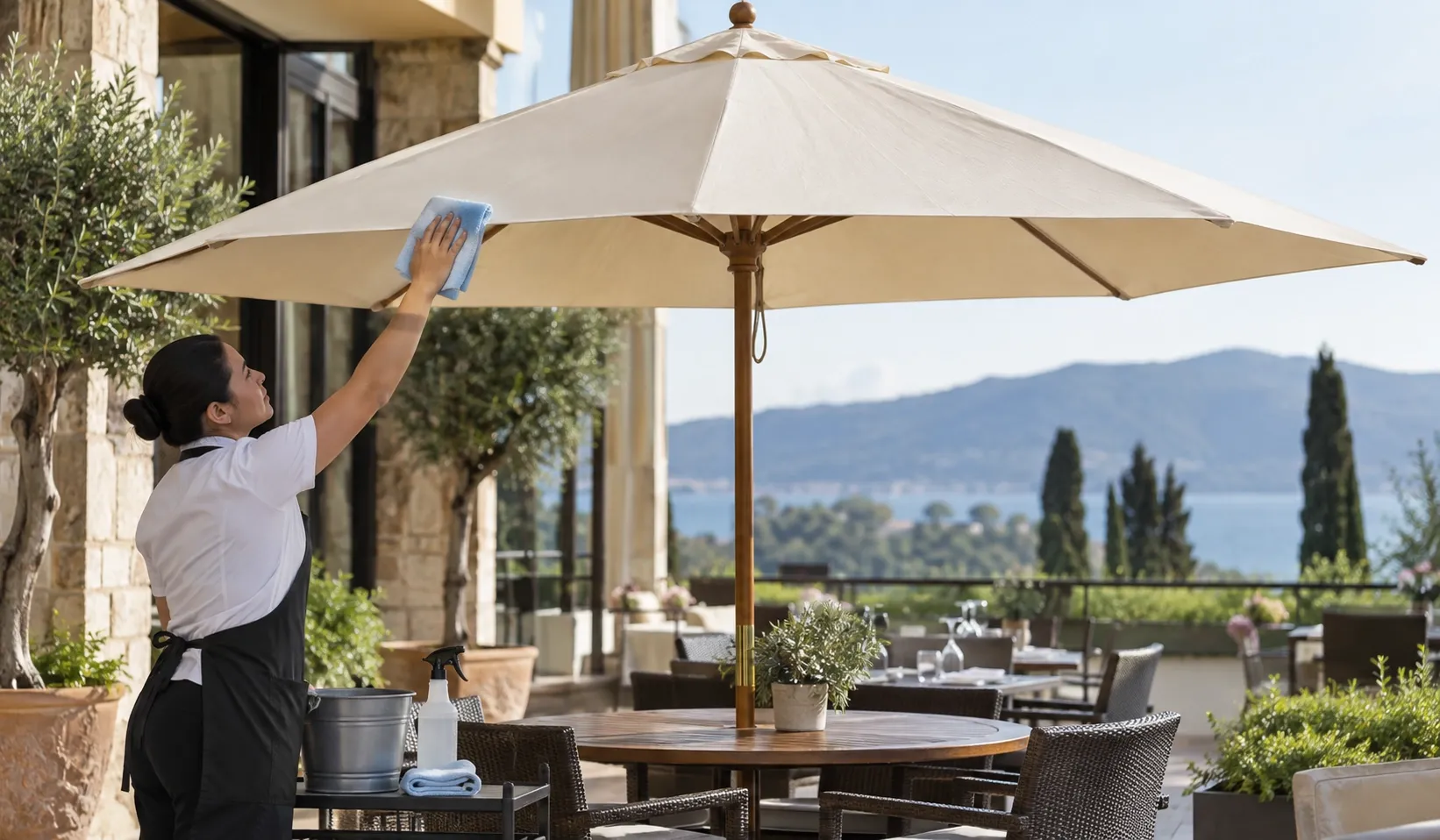
A commercial umbrella used every day should be evaluated as a long-term operating product.
That means 2026 project decisions are increasingly relevant to issues such as:
replaceable canopies, spare parts, cleaning, base compatibility, serviceability and storage.
A commercial umbrella with a replaceable canopy may remain in service after the original fabric eventually fades or becomes damaged.
Likewise, selecting a suitable base or fixed mounting system at the beginning of the project can prevent later problems with circulation and installation.
For hotels and restaurants, lifecycle value can matter more than choosing the lowest initial unit price.
How Should Hospitality Buyers Plan Outdoor Shade in 2026?
Before selecting products, define the project around six questions:
- What activities happen in the outdoor area?
- Which zones require shade during peak operating hours?
- Can center poles be integrated into tables, or is offset shade required?
- Does the furniture layout change regularly?
- Is the installation permanent, movable or seasonal?
- What level of fabric, color, branding and lighting fits the venue?
Once these points are clear, it becomes much easier to compare center pole, cantilever and large commercial umbrella options.
Conclusion
The biggest outdoor shade trend in 2026 is not one particular umbrella shape or fabric color.
It is the growing importance of shade as part of the overall outdoor-space design.
Restaurants use shade to make dining terraces more comfortable. Hotels use it to organize pool decks and courtyards. Resorts use large-scale umbrellas to create distinctive lounge and gathering areas.
For commercial projects, the best solution combines shade coverage, furniture layout, circulation, operation, materials and visual design.
Planning a Commercial Outdoor Shade Project?
Send Snova Outdoor your site dimensions or floor plan, application, preferred umbrella type, quantity, delivery country and customization requirements.
We can recommend suitable center pole, cantilever and large commercial umbrella configurations for restaurants, hotels, resorts and other hospitality outdoor spaces.