Aug 5, 2026Buying Guides
Commercial Patio Umbrella Buying Guide for Hospitality
Learn how to choose commercial patio umbrellas for hotels, restaurants, and resorts, including considerations such as structure, size, fabric, bases, operation, and customization.
Commercial Patio Umbrella Buying Guide for Hotels, Restaurants, and Resorts
Choosing a commercial patio umbrella involves much more than selecting a canopy size or matching a fabric color to outdoor furniture.
For hotels, restaurants, resorts, cafés, and other hospitality projects, an umbrella must provide practical shade while fitting the furniture layout, guest circulation, operating routine, local weather conditions, and overall design concept.
A residential umbrella may be suitable for occasional backyard use, but a commercial outdoor space usually requires stronger construction, replaceable parts, stable mounting, durable fabrics, and a structure that staff can operate safely every day.
This guide explains the main factors buyers should consider before requesting quotations or placing an order.
1. Start With the Application and Site Conditions
The first step is to define where and how the umbrella will be used.
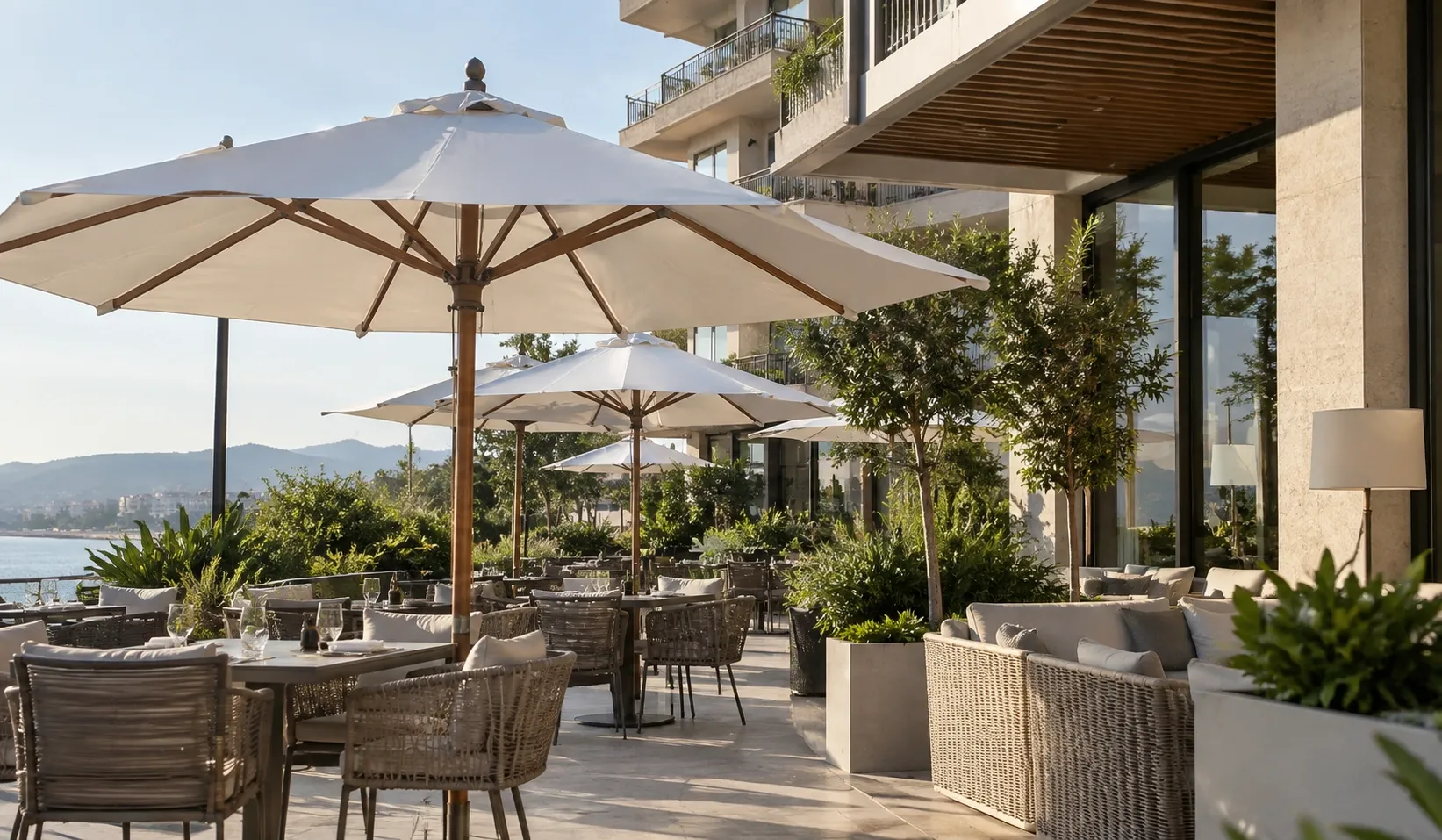
A restaurant terrace may need umbrellas positioned through dining tables. A hotel pool area may require side-post umbrellas that keep poles and bases away from loungers. A resort courtyard may require larger structures to cover several seating groups while using fewer support posts.
Before choosing a model, collect the following information:
- Size of the outdoor area
- Number and arrangement of tables or loungers
- Main hours of use
- Sun direction during peak operating hours
- Available space for poles and bases
- Installation surface
- Local wind and weather exposure
- Whether the umbrellas need to be moved regularly
- Branding or custom color requirements
A simple floor plan or site photo can help a supplier recommend a more suitable structure.
Buyers should also consider nearby walls, doors, trees, lighting fixtures, walkways, service routes, and pool edges. The umbrella must fit both the open position and the space required for opening, closing, tilting, or rotating.
2. Choose the Right Umbrella Structure
Commercial outdoor umbrellas generally fall into three main categories.
Center Pole Umbrellas
A center pole umbrella has a mast positioned directly below the middle of the canopy. It is one of the most common choices for restaurants, cafés, hotels, and outdoor furniture programs.
Center pole umbrellas work particularly well when:
- The pole can pass through a table
- A compact and straightforward structure is preferred
- The venue needs multiple repeated shade units
- Easy operation and replacement are important
- The budget is more limited than for cantilever systems
They are available with push-up, crank, or rope-and-pulley opening systems.
Cantilever Umbrellas
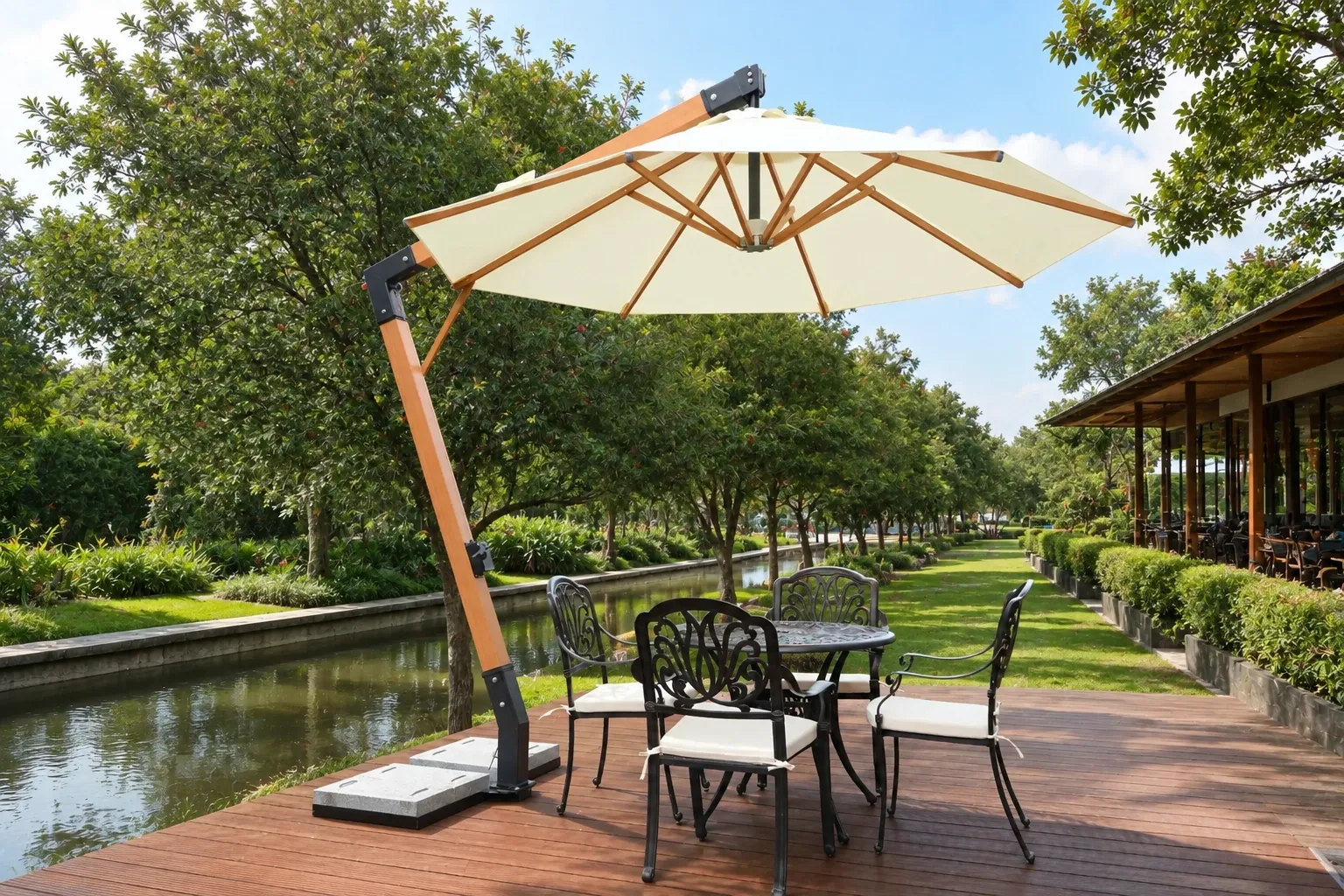
A cantilever umbrella uses a side post and supporting arm, leaving the space directly below the canopy more open.
This structure is often selected for:
- Poolside loungers
- Outdoor sofas and lounge furniture
- Large dining tables without umbrella holes
- Hotel terraces and resort areas
- Flexible seating arrangements
Cantilever models may include rotation and tilt functions, allowing the shade position to be adjusted during the day. However, they usually require more operating clearance and a larger or heavier base than center pole umbrellas.
Large Commercial Umbrellas
Large commercial umbrellas are designed for wider coverage in courtyards, restaurant terraces, resort plazas, and other project-based spaces.
They may use a large center mast, cantilever structure, telescopic system, or multiple canopies supported by one central structure.
Because of their size, these umbrellas normally require more detailed planning for installation, foundations, wind exposure, freight, and daily operation.
3. Match the Canopy Size to the Furniture Layout
The stated canopy size does not always equal the usable shaded area.
Shade changes throughout the day as the sun moves, and the canopy may not cover every chair continuously. Buyers should therefore evaluate the complete furniture layout rather than selecting a size based only on the table dimensions.
Common commercial sizes include:
- 2.5 × 2.5 m square
- 3 × 3 m square
- 3 m round
- 3.5 m round
- 3 × 4 m rectangular
A round canopy often coordinates well with round tables and traditional hospitality layouts. Square umbrellas are useful for modular furniture arrangements, while rectangular canopies may suit long dining tables or narrow terraces.
Allow sufficient space between adjacent umbrellas. Canopies should not collide when opening, moving, or responding to moderate airflow.
Also check the closed height and folded canopy position. In some restaurant layouts, the umbrella must close without hitting the table, chairs, or nearby structures.
4. Compare Frame, Fabric, Base, and Operation
The complete umbrella system should be evaluated, not just the canopy.
Frame
Commercial umbrella frames may use aluminum, steel, wood, fiberglass, or a combination of materials.
Aluminum is commonly selected because it is relatively lightweight, corrosion-resistant, and available in powder-coated or wood-look finishes. Fiberglass ribs can provide controlled flexibility, while aluminum ribs offer a more rigid and clean structural appearance.
Buyers should compare pole dimensions, wall thickness, rib profiles, hubs, supporting arms, fasteners, and connection points.
Fabric
Common commercial canopy fabrics include solution-dyed polyester and solution-dyed acrylic.
Important factors include:
- Fabric weight and construction
- UV protection
- Colorfastness
- Water resistance
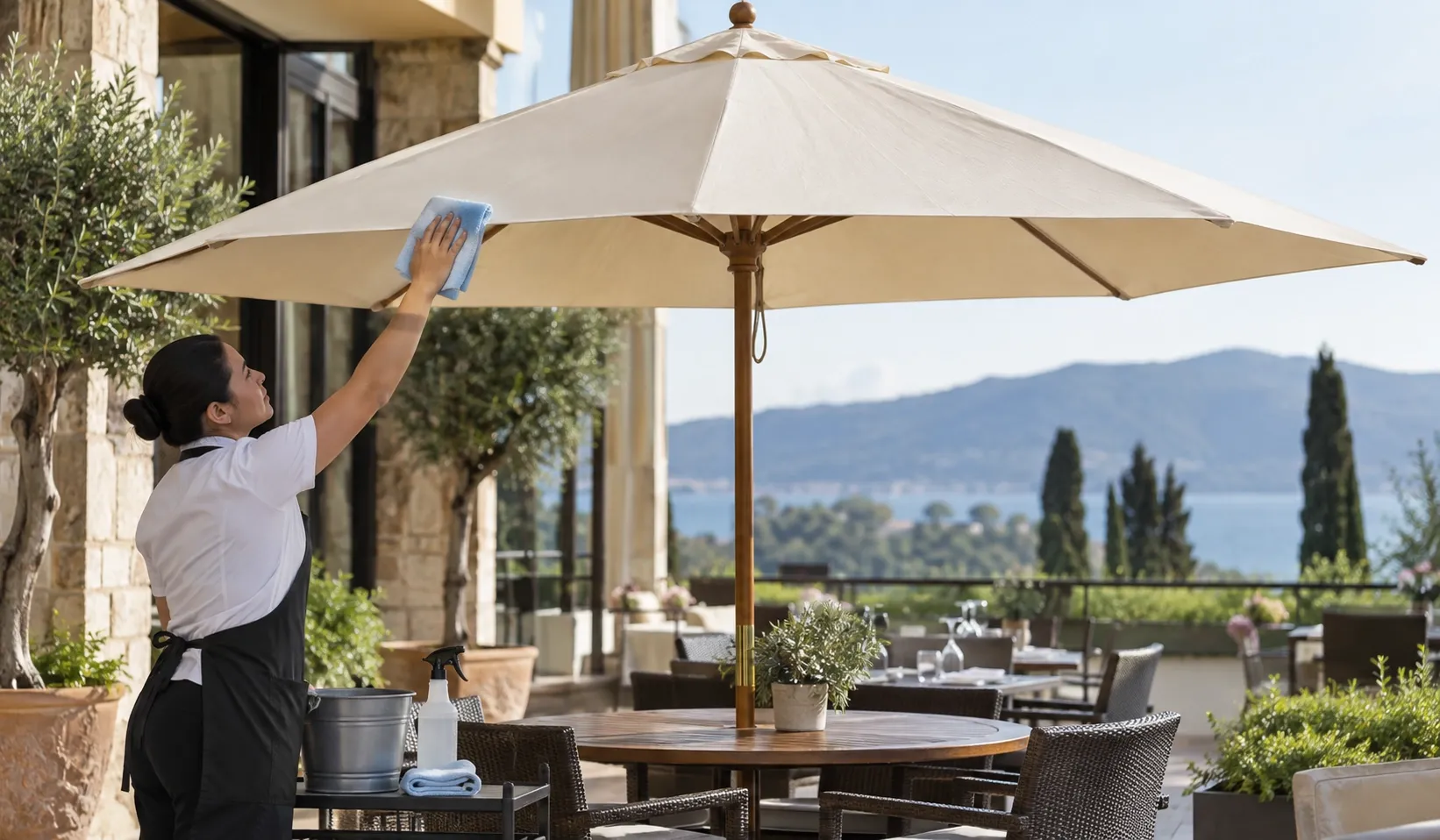
- Cleaning requirements
- Seam quality
- Replaceable canopy availability
A heavier fabric is not automatically better. Yarn quality, dyeing method, coating, sewing, and canopy tension also affect performance.
Base and Installation
Base selection depends on the umbrella structure, canopy size, site exposure, surface, and whether the system must remain movable.
Options may include:
- Cross bases with ballast tiles
- Steel plate bases
- Concrete or stone bases
- Wheeled bases
- Surface-mounted plates
- In-ground sleeves
There is no universal base weight suitable for every umbrella. Buyers should follow the supplier’s recommendation for the selected model and site conditions.
Opening System
Push-up systems are often practical for fast daily operation. Crank systems may make larger canopies easier to open. Rope-and-pulley systems are simple and serviceable but require correct use and regular inspection.
The best mechanism depends on canopy size, staff experience, operating frequency, and maintenance expectations.
5. Use a Commercial Buyer Checklist
Before requesting a final quotation, confirm:
- Umbrella type
- Canopy shape and size
- Frame material and finish
- Pole and rib specifications
- Fabric type, weight, and color
- Opening, tilt, or rotation functions
- Base or fixed mounting method
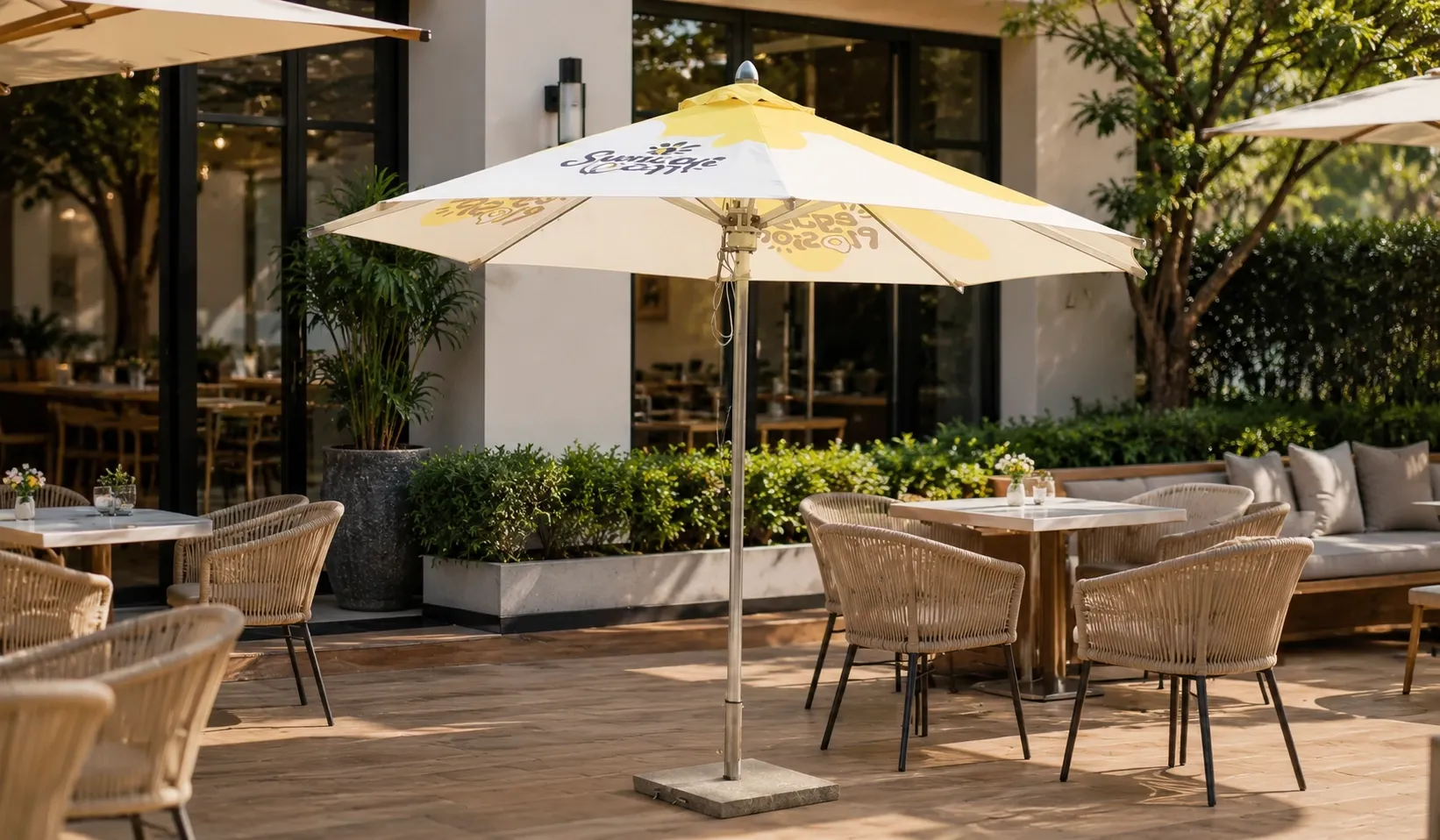
- Logo printing requirements
- Quantity
- Replacement canopy and spare-part availability
- Packaging dimensions
- Delivery country
- Required Incoterm
- Target delivery date
Quotations should be compared using the same specifications. A lower unit price may exclude the base, printing, packaging, spare parts, or local shipping costs.
For commercial projects, lifecycle value is usually more important than the lowest initial price. A serviceable umbrella with replaceable fabric and available components may provide better long-term value than a cheaper product that must be replaced completely after one damaged part.
Conclusion
The best commercial patio umbrella is not necessarily the largest or most expensive model.
It is the umbrella that fits the site layout, furniture arrangement, operating routine, design style, installation conditions, and expected level of use.
By defining the application first and comparing the complete system—including frame, fabric, base, mechanism, packaging, and after-sales support—buyers can make a more accurate and cost-effective decision.
For a hotel, restaurant, resort, or commercial outdoor project, send us your preferred umbrella type, canopy size, quantity, application, delivery country, and customization requirements. Snova Outdoor can help recommend suitable center pole, cantilever, and large commercial umbrella configurations for your project.