Aug 5, 2026Buying Guides
What Buyers Should Know About Commercial Umbrella Fabrics
A practical guide to commercial umbrella fabrics, including fiber types, fabric weight, UV resistance, water resistance, colorfastness, printing, and project-specific selection.
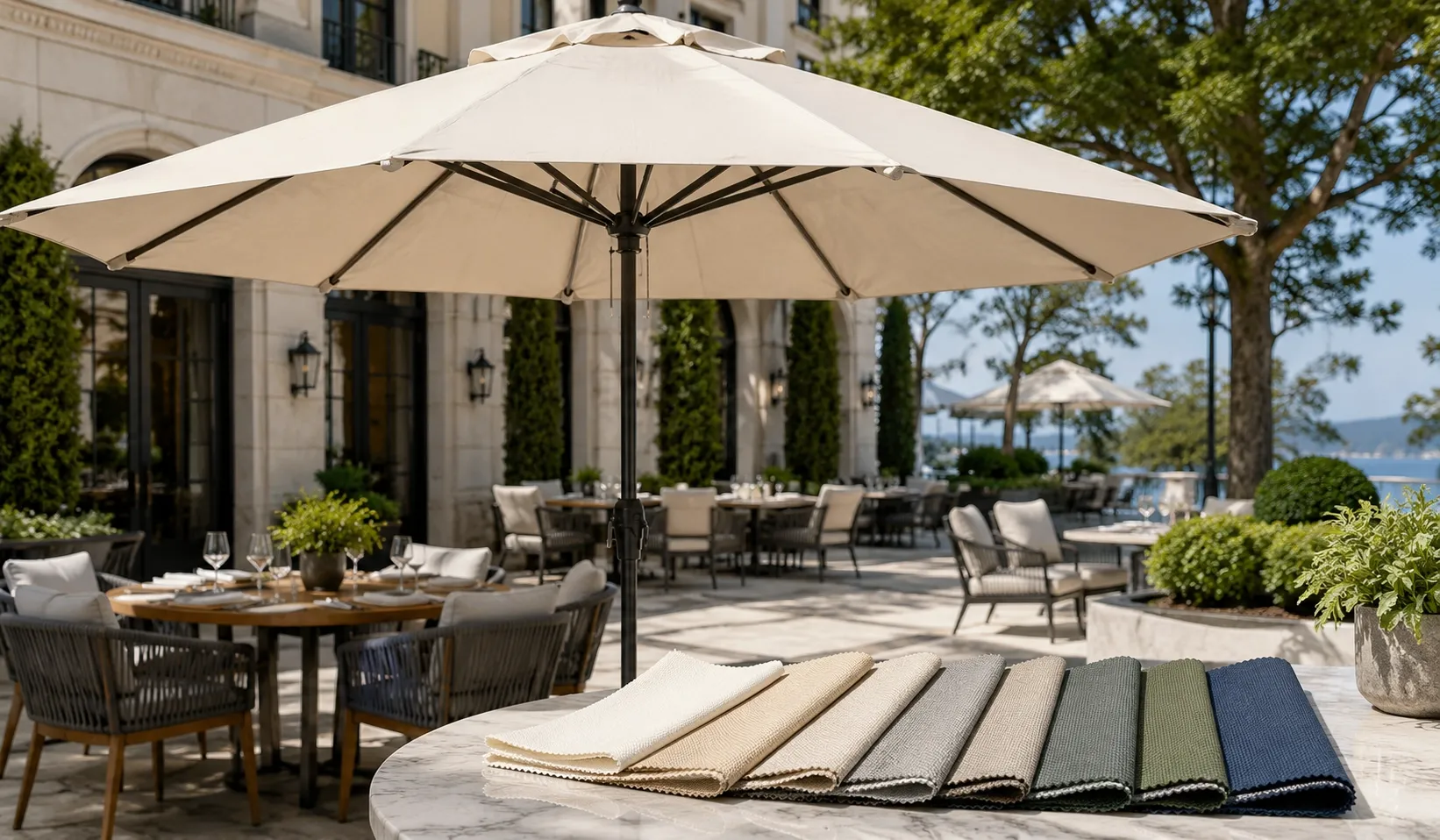
Commercial umbrella fabric affects much more than appearance. It influences shade, color retention, maintenance, branding options, and how well an umbrella performs in a particular environment.
For importers, distributors, hospitality buyers, and project teams, the best fabric is not always the heaviest or most expensive option. It is the material that matches the intended application, climate, budget, and expected service life.
Start with the Project Environment
Before comparing fabric specifications, clarify where and how the umbrellas will be used.
Important considerations include:
- Indoor or outdoor installation
- Permanent or seasonal use
- Daily sun exposure
- Rain and humidity
- Coastal or high-wind environments
- Expected operating hours
- Cleaning and maintenance frequency
- Branding or color-matching requirements
A hotel terrace with year-round exposure may need a different fabric from a seasonal café, promotional event, or residential outdoor area.
Common Fabric Types
Commercial outdoor umbrellas are commonly made with polyester, solution-dyed polyester, acrylic, or other coated outdoor fabrics. Availability depends on the umbrella model, order quantity, color, and project requirements.
Polyester
Polyester is widely used because it offers a practical balance of cost, color selection, and customization.
It is suitable for many hospitality, retail, promotional, and general outdoor applications. Different coatings and treatments may be applied to improve water resistance, UV performance, or surface durability.
Standard polyester can be a good choice for price-sensitive or seasonal projects, but its long-term color performance depends on the fabric grade and exposure conditions.
Solution-Dyed Polyester
With solution-dyed fabric, color is introduced during fiber production rather than applied only to the finished surface.
This generally provides better color consistency and fade resistance than basic dyed polyester. It can be a useful middle option for commercial buyers seeking stronger outdoor performance without moving to a premium acrylic specification.
Acrylic Fabric
Outdoor acrylic fabric is often selected for projects where appearance, color retention, and long-term outdoor use are priorities.
It is commonly considered for hotels, resorts, restaurants, and higher-end outdoor furniture projects. Buyers should still confirm the specific fabric brand, treatment, warranty, and test data rather than relying on the word “acrylic” alone.
Fabric Weight Is Only One Factor
Fabric weight is usually expressed in grams per square meter, or GSM. A higher GSM may indicate a denser or heavier fabric, but it does not automatically guarantee better outdoor performance.
Two fabrics with similar weights may perform differently because of:
- Fiber type
- Yarn construction
- Dyeing method
- Coating
- Surface treatment
- Weave density
- UV stabilizers
- Manufacturing quality
Fabric weight should therefore be reviewed together with the material composition and available test results.
UV Resistance and Colorfastness
UV resistance relates to how well a material withstands sunlight, while colorfastness describes how well it retains its color under specified conditions.
These terms are related but should not be treated as identical.
When color retention is important, ask the supplier about:
- Fabric composition
- Dyeing method
- Applicable test standard
- Reported colorfastness grade
- Testing conditions
- Warranty limitations, if offered
Avoid accepting statements such as “UV-proof” or “never fades” without supporting specifications. All outdoor fabrics are affected by exposure over time, although higher-quality materials can slow the process considerably.
Water Resistance Is Not the Same as Waterproofing
Most commercial umbrella canopies are designed primarily for shade. A fabric may resist light rain without being fully waterproof.
Performance depends on the fabric itself as well as:
- Coating or treatment
- Seam construction
- Stitching
- Vent design
- Canopy angle
- Fabric tension
- Age and maintenance
If rain protection is a key project requirement, state this clearly during the quotation stage. The supplier can then confirm whether the selected fabric and canopy construction are suitable.
Umbrellas should not be treated as permanent all-weather shelters unless they are specifically engineered for that purpose.
Pay Attention to Seams and Construction
Even a good fabric can perform poorly if the canopy is not properly made.
Buyers should review:
- Reinforcement at rib pockets
- Double stitching in high-stress areas
- Seam alignment
- Fabric tension
- Vent construction
- Edge finishing
- Replaceable canopy availability
For large commercial umbrellas, reinforcement and tension are especially important because the canopy covers a wider area and experiences greater structural loads.
Colors, Printing, and Branding
Fabric color affects both appearance and practical performance. Light colors can create a softer, brighter environment, while dark or saturated colors may make stains less visible but can show fading differently over time.
Custom branding may include:
- Screen printing
- Heat-transfer printing
- Digital printing
- Logo panels
- Custom fabric colors
- Branded valances
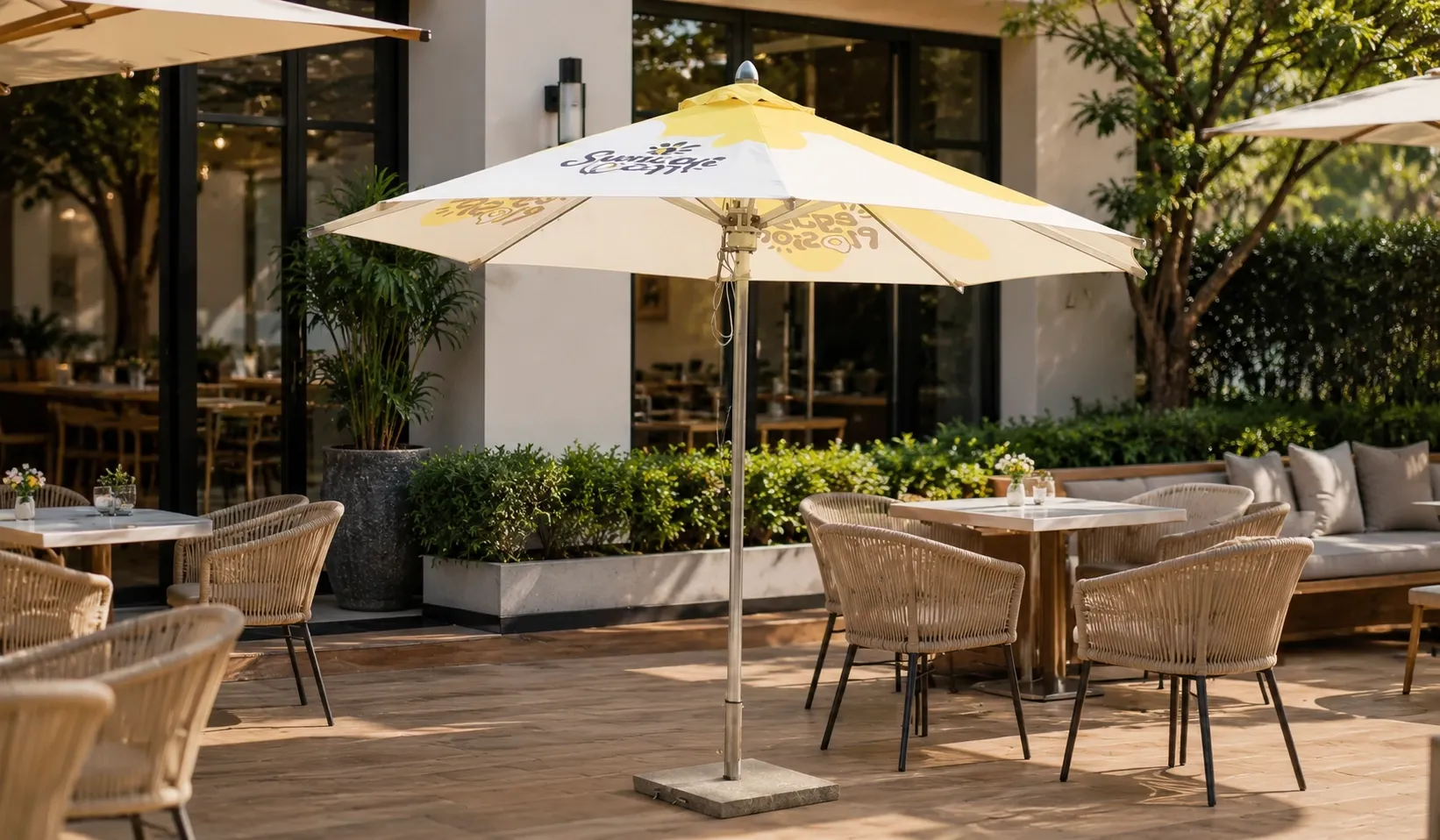
The correct method depends on the fabric, artwork, order quantity, logo size, and expected outdoor exposure.
Ask for artwork requirements, color references, print dimensions, and a sample or rendering before production. Printed areas and base fabric may also age differently outdoors.
Confirm the Fabric Before Ordering
A product image on a screen is not enough for accurate material approval. Colors can vary between monitors, photography, fabric batches, and production runs.
For larger or customized orders, consider requesting:
- A physical fabric swatch
- Available standard color cards
- Material composition
- Fabric weight
- Coating information
- Relevant test reports
- A pre-production sample
- Care and storage instructions
The required level of confirmation should reflect the size and importance of the project.
Maintenance and Storage Matter
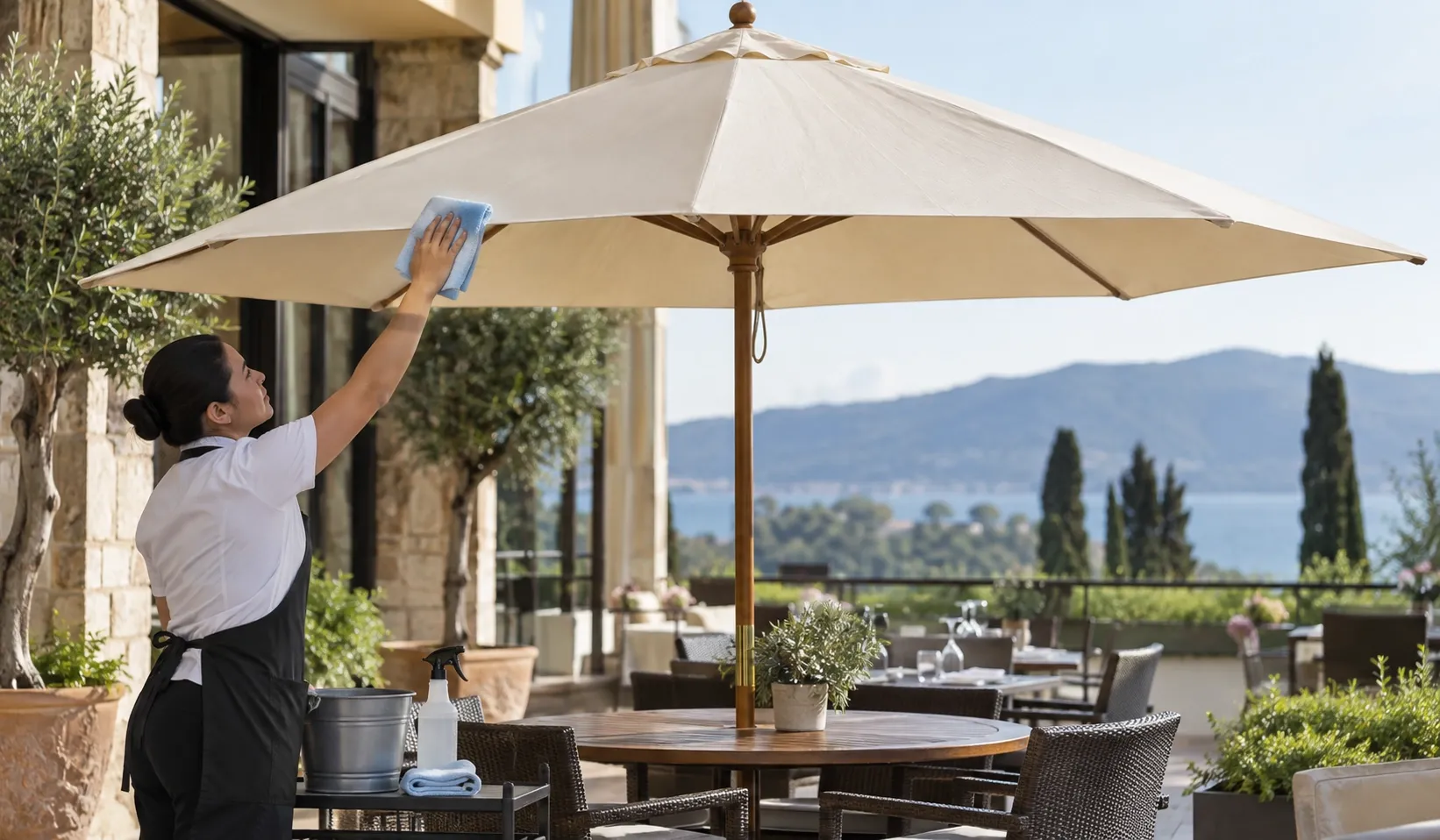
Outdoor fabric lasts longer when it is cleaned and stored correctly.
General practices include:
- Remove loose dirt regularly
- Clean stains before they become embedded
- Allow the canopy to dry before closing or storing it
- Avoid storing wet fabric for extended periods
- Close umbrellas during unsuitable weather
- Follow the fabric supplier’s cleaning instructions
- Inspect seams and high-stress areas periodically
Harsh chemicals or incorrect cleaning methods may damage coatings, alter color, or weaken the fabric.
Questions to Include in Your Inquiry
To receive a more accurate fabric recommendation, provide:
- Project location and environment
- Umbrella type and size
- Estimated quantity
- Expected outdoor exposure
- Preferred color
- Required fabric grade
- Branding or printing requirements
- Water-resistance expectations
- Target budget
- Expected delivery schedule
You do not need to know every specification before contacting a supplier. Basic project information is usually enough to identify suitable options.
Choosing the Right Commercial Umbrella Fabric
There is no single fabric specification that suits every commercial project.
Standard polyester may be appropriate for seasonal or budget-focused applications. Solution-dyed polyester can offer a stronger balance of cost and outdoor performance, while acrylic fabric may be preferred for projects where long-term appearance and color retention are especially important.
The final decision should consider the complete canopy system—not only the fabric name—including construction, reinforcement, intended use, maintenance, and environmental exposure.
Snova Outdoor can recommend fabric options based on umbrella type, project location, quantity, branding requirements, and budget. Share what you know so far, and we can help narrow down the appropriate specification.