Aug 5, 2026Buying Guides
How Center Pole Umbrellas Work | Commercial Buyer Guide
Learn how center pole umbrellas work, including frame parts, opening systems, bases, commercial applications, and a practical buyer checklist.
How Center Pole Umbrellas Work: Structure, Operation, and Best Applications
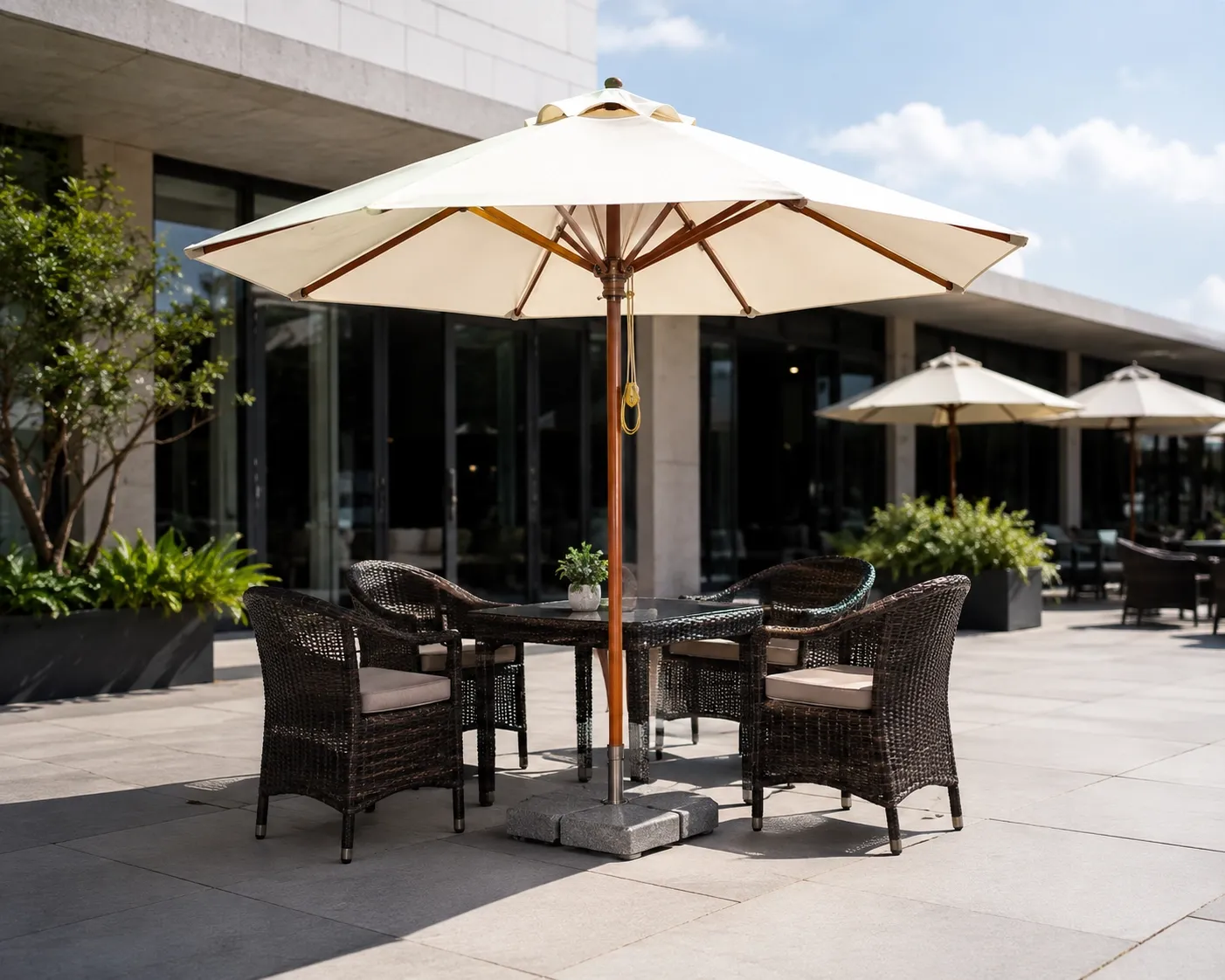
A center-pole umbrella—also called a market umbrella or patio umbrella—uses a single vertical mast beneath the center of the canopy. The mast transfers the load downward to a weighted base, a table-and-base combination, a surface-mount, or an in-ground sleeve.
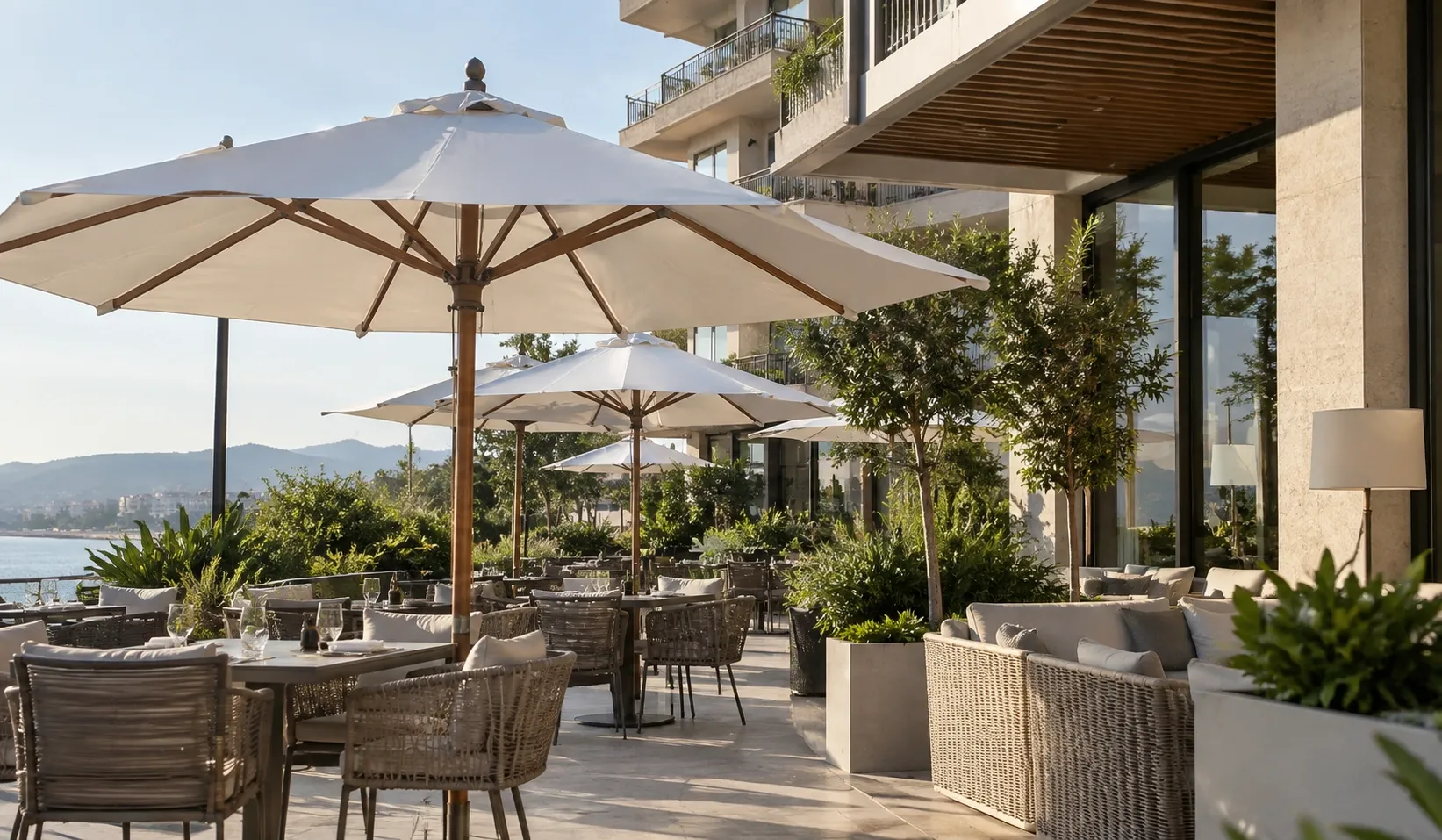
This compact structure is widely used for restaurant tables, café terraces, hotel courtyards, resorts, and outdoor furniture programs. This guide explains how it works, where it performs best, and what commercial buyers should confirm before ordering.
Quick Answer: How Does a Center Pole Umbrella Work?
A center pole umbrella opens when a movable runner hub travels upward along the mast. As the runner rises, supporting struts push the ribs outward and tension the canopy. The runner is then secured by a locking pin, latch, crank mechanism, or rope-and-pulley system.
To close the umbrella, the runner moves downward, allowing the ribs and fabric panels to fold around the mast.
This direct support structure works especially well where the pole can pass through the center of a dining table.
1. Main Parts of a Center Pole Umbrella
Center Mast
The mast is the main vertical support. It may be made from aluminum, steel, hardwood, or another suitable material. Aluminum is common because it offers a clean appearance, manageable weight, and good corrosion resistance when properly finished.
Buyers should confirm pole diameter, wall thickness, total height, finish, and compatibility with the table hole and base.
Ribs and Supporting Struts
The ribs extend from the upper hub to the canopy edge. Supporting struts connect the ribs to the moving runner and help open the frame.
Commercial models may use aluminum, steel, wood, fiberglass, or mixed-material systems. Quality also depends on rib profile, wall thickness, flexibility, connections, and the complete frame design.
Upper Hub and Runner Hub
The upper hub holds the inner ends of the ribs. The runner hub moves vertically along the mast and connects to the supporting struts.
Their alignment, fit, and connection points should be checked during production and final assembly.
Canopy and Vent
The canopy is normally made from several sewn fabric panels attached to the ribs. A top vent may improve airflow, but it does not make an umbrella safe to leave open in strong wind.
2. Common Opening and Locking Systems
The right operating system depends on canopy size, staff routine, and maintenance expectations.
Push-Up With Locking Pin
The operator manually raises the runner and secures it with a pin or locking device. This simple system is practical for restaurants and cafés that open and close several umbrellas each day.
Crank System
A crank operates an internal cable or mechanical system to raise and lower the canopy. It can make larger umbrellas easier to handle, although the additional moving parts require correct use and inspection.
Rope-and-Pulley System
The operator pulls a rope to lift the runner and secures the umbrella with a pin or cleat. The system is easy to understand and service, but the rope, pulley, and locking parts should be checked for wear.
3. Best Applications for Center Pole Umbrellas
Restaurants and Cafés
When a dining table includes a central umbrella hole, the pole can pass directly through it. This keeps the support away from chairs and service routes while creating a balanced appearance.
Common commercial sizes include 2.5 × 2.5 m, 3 × 3 m, and 3 m round. The correct size depends on table dimensions, chair positions, spacing, and sun direction.
Hotels and Resorts
Center pole umbrellas suit breakfast terraces, courtyards, garden seating areas, and poolside seating. They are useful where a project needs multiple coordinated units with matching frame finishes, fabrics, and branding.
Outdoor Furniture Programs
Distributors and furniture brands often pair center pole umbrellas with dining collections because the structure is familiar, space-efficient, and available at different price levels.
Beach clubs and coastal resorts also require careful anchoring, cleaning, storage, and protection from salt exposure.
4. Base and Installation Requirements
A center pole umbrella still needs a compatible support system. A dining table does not normally replace the base. In most installations, the pole passes through the table and continues into a weighted base below.
Common options include:
- Freestanding weighted bases
- Steel or stone plate bases
- Wheeled bases
- Surface-mounted plates
- In-ground sleeves
Base selection depends on the umbrella model, canopy size, pole diameter, installation surface, site exposure, and whether the system must remain movable. There is no universal base weight for every commercial umbrella.
For fixed installations, review the substrate, reinforcement, drainage, and waterproofing before installation.
5. What Commercial Buyers Should Check
Before ordering, compare the complete specification rather than canopy size and unit price alone.
Confirm:
- Canopy shape and finished size
- Mast material, diameter, wall thickness, and finish
- Rib material, profile, and quantity
- Hub and connection construction
- Opening and locking method
- Fabric type, weight, color, and UV information
- Vent and valance design
- Base or fixed mounting method
- Table-hole and clearance requirements
- Replacement canopy and spare-part availability
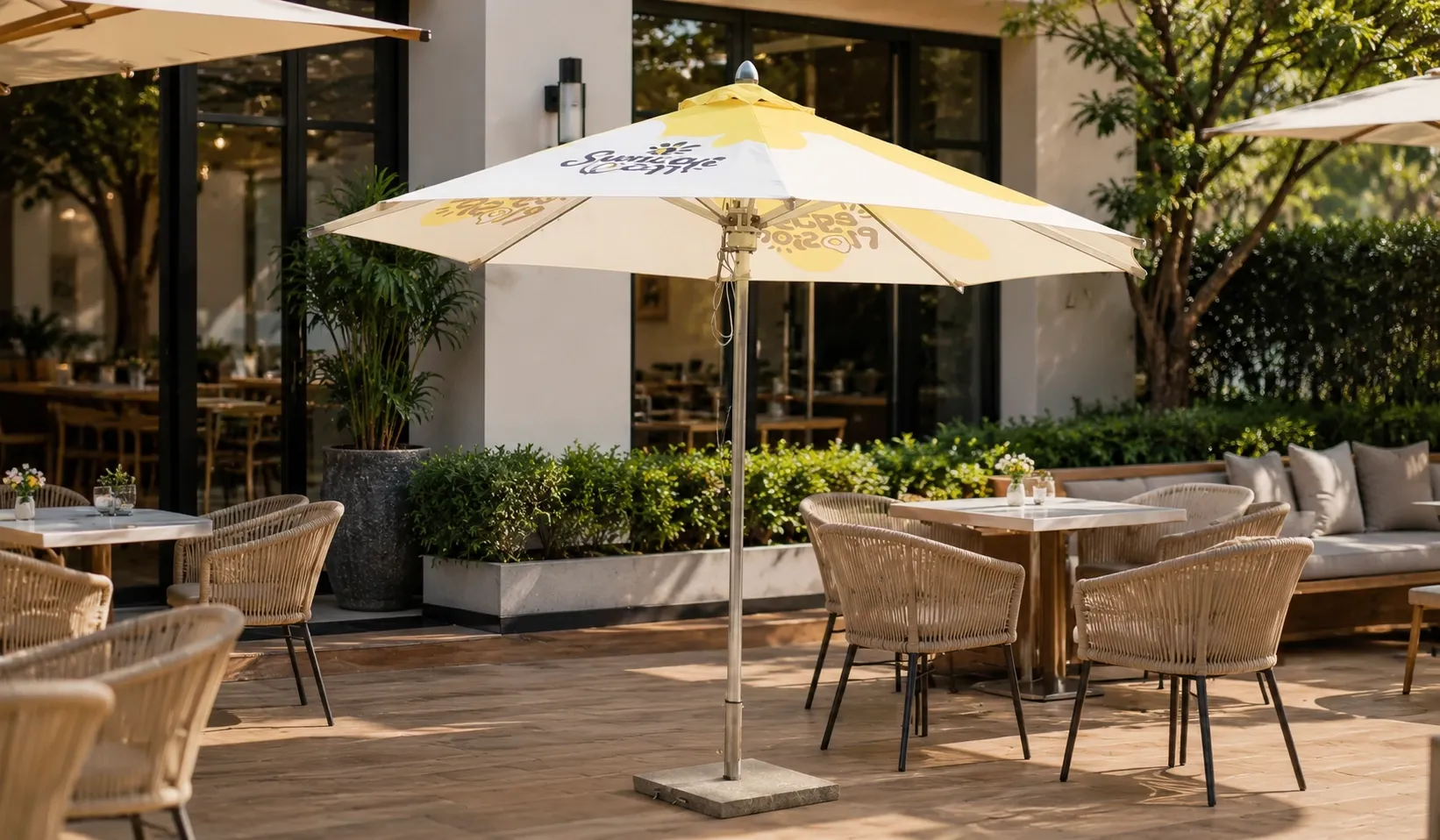
- Logo printing and packaging
- Quantity, delivery country, and required Incoterm
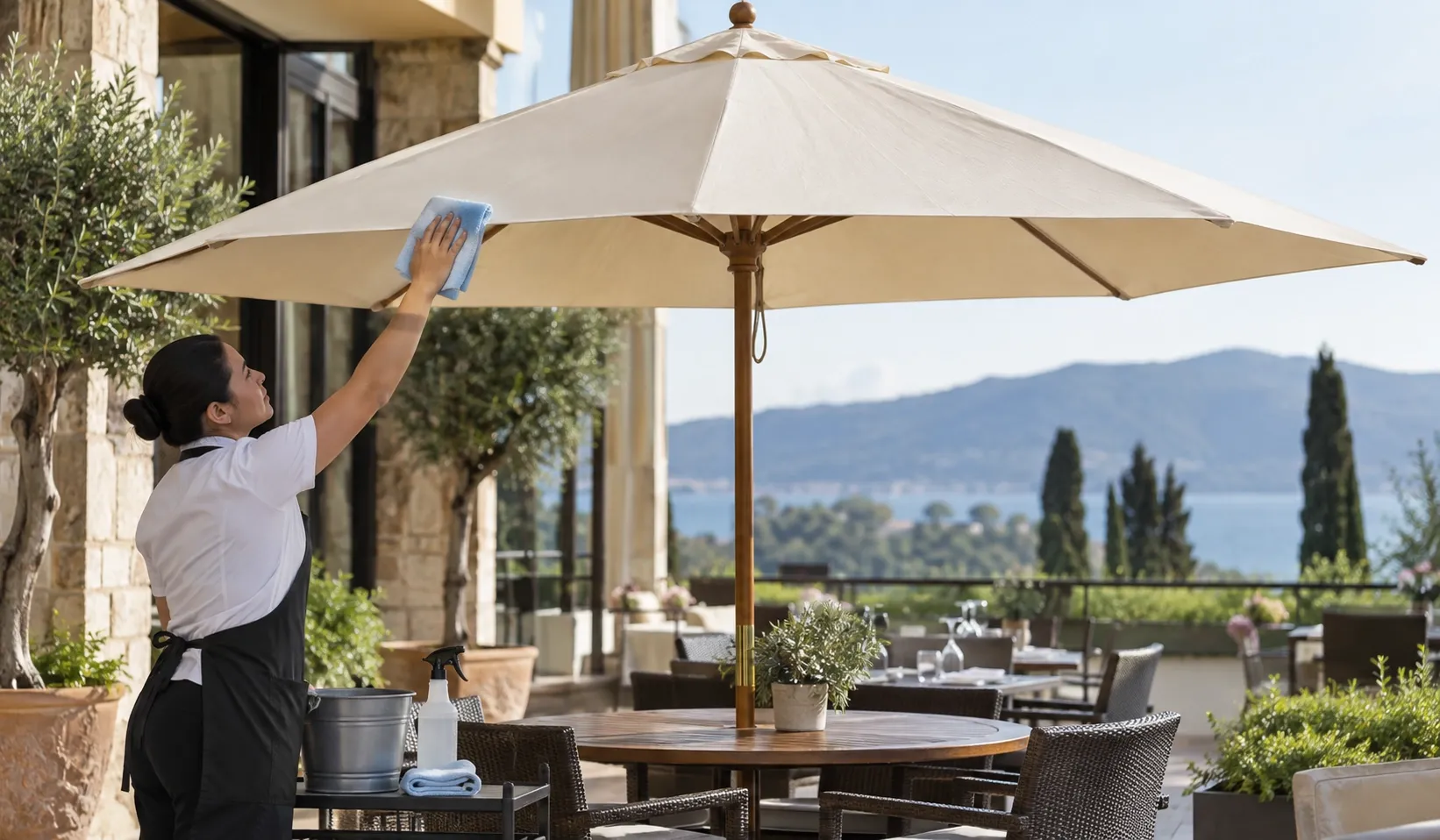
During an in-factory assembly check, the supplier should inspect mast straightness, rib and hub connections, canopy tension, overall alignment, and smooth opening and locking. These checks can reveal issues that may not appear on a specification sheet.
Conclusion
A center pole umbrella uses a movable runner, supporting struts, and ribs to open and tension a canopy around one central mast. Its direct structure makes it a practical option for commercial dining tables, hotel terraces, resort seating, and outdoor furniture collections.
The right model depends on the application, size, frame specification, opening system, fabric, base, exposure, and operating routine.
For a commercial project, send Snova Outdoor your preferred size, quantity, application, frame finish, fabric requirements, delivery country, and branding needs. We can recommend suitable center pole umbrella configurations and prepare a project-based quotation.