Aug 24, 2026Buying Guides
Restaurant Patio Umbrellas: Size, Layout & Buyer Guide
Learn how to choose restaurant patio umbrellas by layout, table size, shade coverage, base, operation, and commercial project requirements.
Restaurant Patio Umbrellas: Layout, Size, and Daily Operation
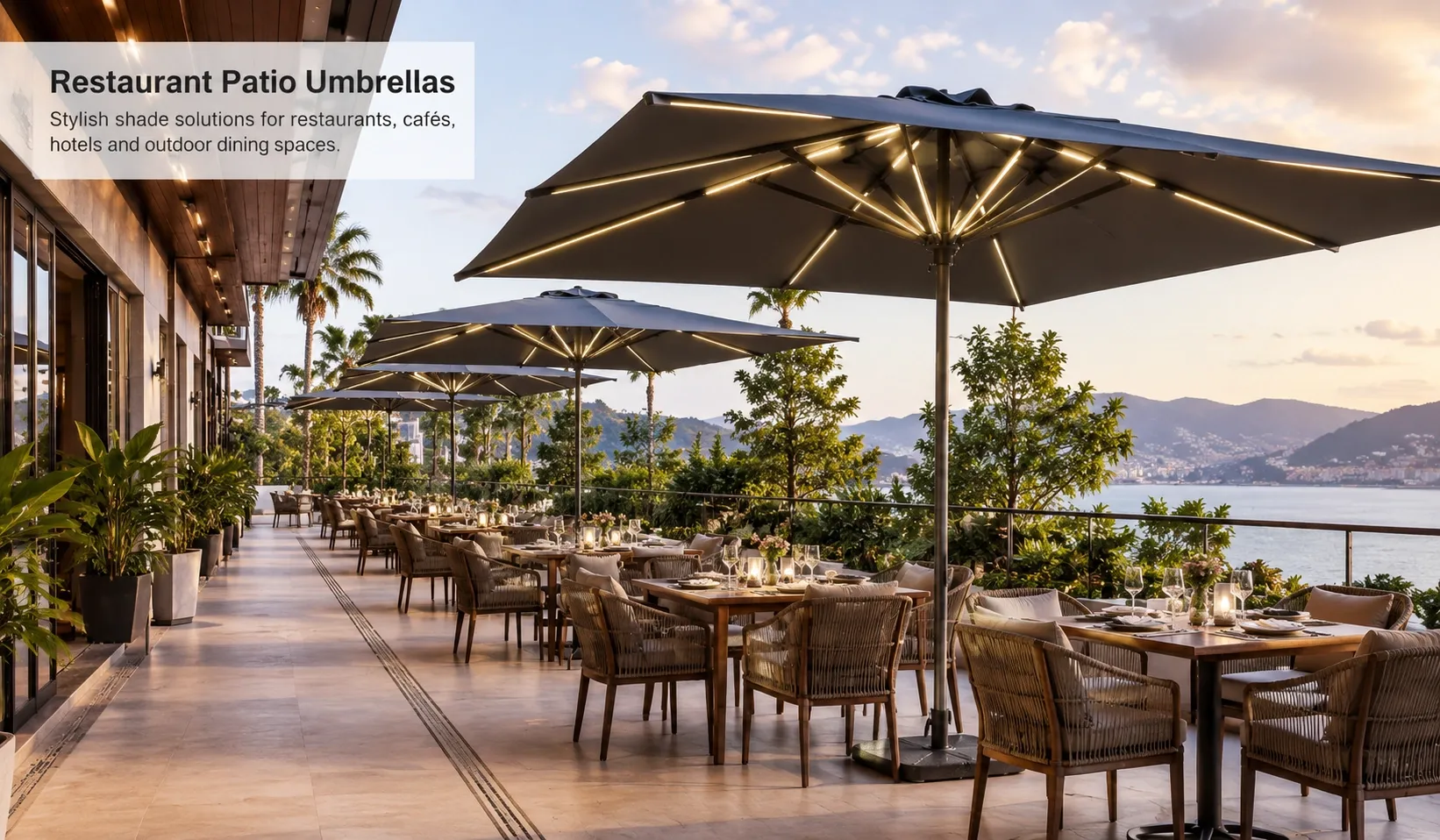
Restaurant patio umbrellas do more than provide shade. In a commercial dining area, they affect table placement, guest comfort, staff circulation, outdoor capacity, and the overall appearance of the venue.
A suitable umbrella should cover the dining area without blocking servers, interfering with chairs, or creating unnecessary obstacles between tables.
For restaurants, cafés, hotels, and hospitality projects, umbrella selection should therefore begin with the seating layout and daily operating routine—not simply with canopy size.
This guide explains how to plan commercial umbrellas around restaurant tables, choose an appropriate structure, and prepare the information needed for an accurate quotation.
Quick Answer: What Type of Umbrella Is Best for a Restaurant Patio?
For many restaurant dining tables, a center pole umbrella is the most straightforward option when the pole can pass through a table.
A cantilever umbrella can be more suitable for larger tables, lounge seating, or layouts where a center pole would interfere with furniture.
For large terraces or communal dining areas, large commercial umbrellas may cover several seating zones with fewer supporting posts.
The best choice depends on table arrangement, required shade, available base space, service routes, and how often staff need to open and close the umbrellas.
1. Start With the Restaurant Seating Layout
Before selecting an umbrella, map the outdoor dining area.
Record:
- Patio length and width
- Number of tables
- Table dimensions
- Number of seats per table
- Distance between tables
- Main service routes
- Doors and emergency access
- Planters, walls, columns, and lighting
- Available space for umbrella bases
This step is important because an umbrella that looks suitable in a product catalogue may create problems once chairs and service movement are added.
For example, a large freestanding base placed directly behind a dining chair may restrict how far the guest can move the chair. A cantilever mast positioned in a narrow service route can create another obstruction.
A simple floor plan with table and umbrella positions can prevent these conflicts before ordering.
2. Center Pole, Cantilever, or Large Commercial Umbrella?
Center Pole Umbrellas
Center pole umbrellas are commonly used for restaurant tables with a central umbrella hole.
The pole passes through the table and continues into a compatible base below.
Advantages include:
- Compact support position
- Familiar operation
- Efficient repeated table layouts
- Wide selection of sizes and finishes
- Relatively simple replacement and maintenance
They are particularly suitable for cafés and restaurants using multiple individual dining tables.
Cantilever Umbrellas
Cantilever umbrellas position the supporting mast beside the shaded area.
This keeps the center of the dining space open and can be useful for:
- Large rectangular tables
- Tables without umbrella holes
- Flexible seating layouts
- Outdoor sofas and lounge areas
- Premium restaurant terraces
However, buyers must account for the side mast, supporting arm, base footprint, and rotation or tilt clearance.
Large Commercial Umbrellas
For larger restaurant terraces, one large commercial umbrella may cover several tables.
This can create a cleaner visual layout with fewer posts, but installation, freight, operating clearance, and wind exposure require more planning.
Sometimes several medium-size umbrellas provide more flexibility than one very large canopy, especially when tables are frequently rearranged.
3. Match Umbrella Size to Tables and Shade Coverage
The canopy should extend beyond the table surface so that seated guests receive useful shade.
However, buyers should not assume that the stated canopy dimensions equal the shaded area throughout the day.
Sun direction changes, particularly during lunch and late-afternoon service.
Common commercial umbrella dimensions may include:
- 2.5 × 2.5 m square
- 3 × 3 m square
- 3 m round
- 3.5 m round
- 3 × 4 m rectangular
The correct choice depends on the table shape and seating arrangement.
A round umbrella often works naturally with round tables. Square umbrellas coordinate well with square or modular restaurant layouts. Rectangular canopies can be useful over longer communal dining tables.
When several umbrellas are installed together, leave sufficient spacing between canopy edges. They should not collide during opening, normal movement, or changing weather conditions.
4. Do Not Ignore the Base
The umbrella base is part of the restaurant layout.
A base that is too large can reduce usable floor area, while a base that is too light may not be suitable for the selected umbrella.
Center pole systems may use:
- Stone or concrete bases
- Steel plate bases
- Fillable bases
- Wheeled commercial bases
- Ground sleeves
- Surface-mounted systems
Cantilever umbrellas generally require more substantial support because the canopy extends away from the mast.
There is no universal base weight for every restaurant umbrella. Base selection should follow the requirements of the specific umbrella model, installation surface, and site conditions.
For permanent restaurant terraces, fixed mounting may reduce floor obstruction compared with large movable bases.
5. Plan for Daily Restaurant Operation
Commercial umbrellas are usually opened and closed much more frequently than umbrellas in residential settings.
The operating system should therefore suit the staff routine.
Push-Up Systems
A push-up umbrella can be convenient when staff need to open several umbrellas quickly before service.
Crank Systems
Crank operation may make larger canopies easier to manage, although cables and mechanical components should be inspected regularly.
Rope-and-Pulley Systems
These are simple and serviceable, but staff should use the locking system correctly and check ropes and pulleys for wear.
Whatever mechanism is selected, employees should know:
- Who opens the umbrellas
- Who closes them
- When they should be closed because of weather
- How to secure the locking system
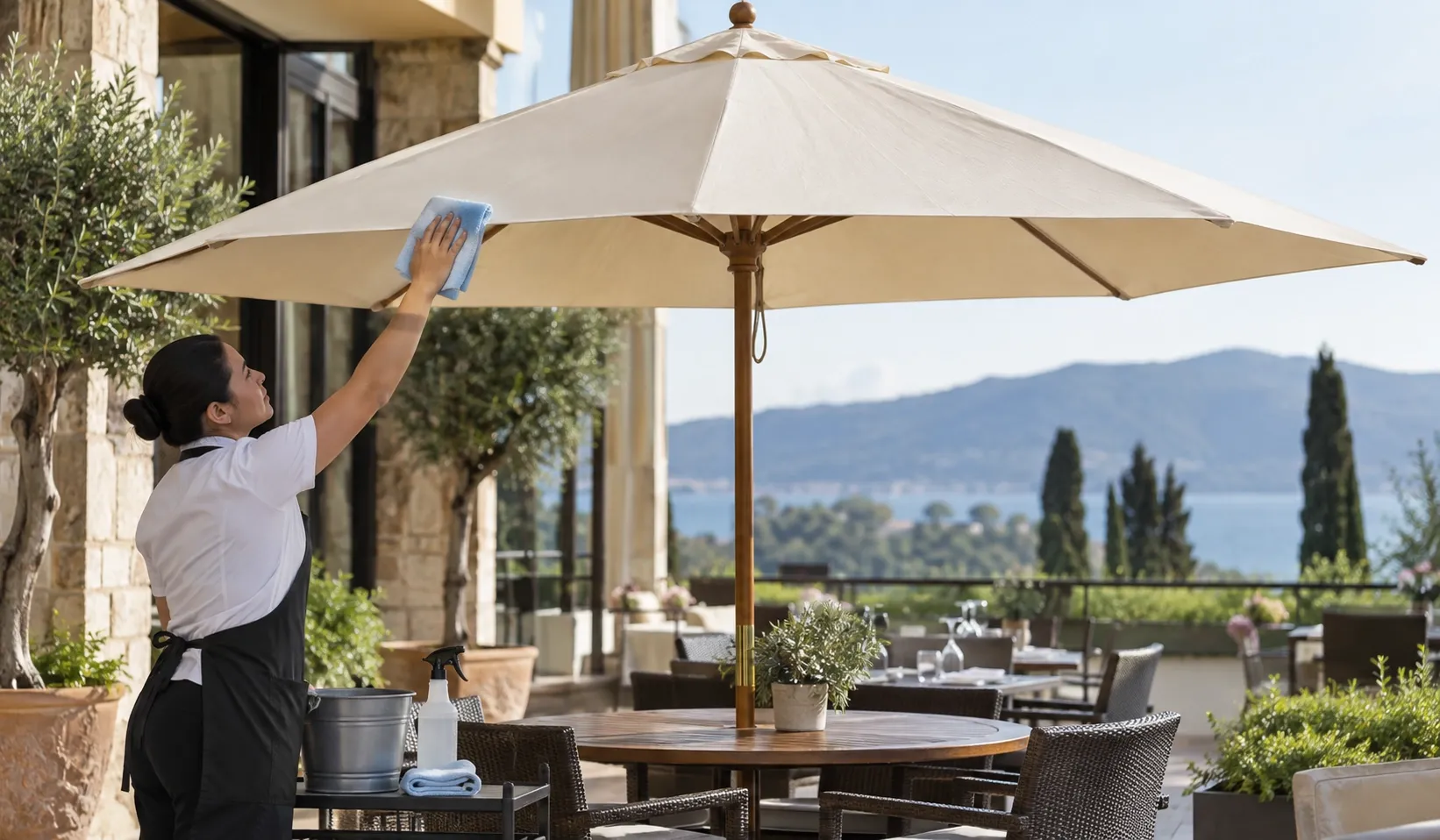
- How to report damaged ribs, fabric, cables, or hardware
A heavier base should never be treated as permission to leave an umbrella open during severe weather.
6. Think About Fabric, Branding, and Replacement
Restaurant umbrellas are highly visible parts of the outdoor dining environment.
Fabric color should therefore coordinate with furniture, architecture, signage, and the overall brand.
Commercial options may include solution-dyed polyester or acrylic fabrics, depending on the required performance level and budget.
Restaurants can also customize:
- Canopy colors
- Frame finishes
- Valances
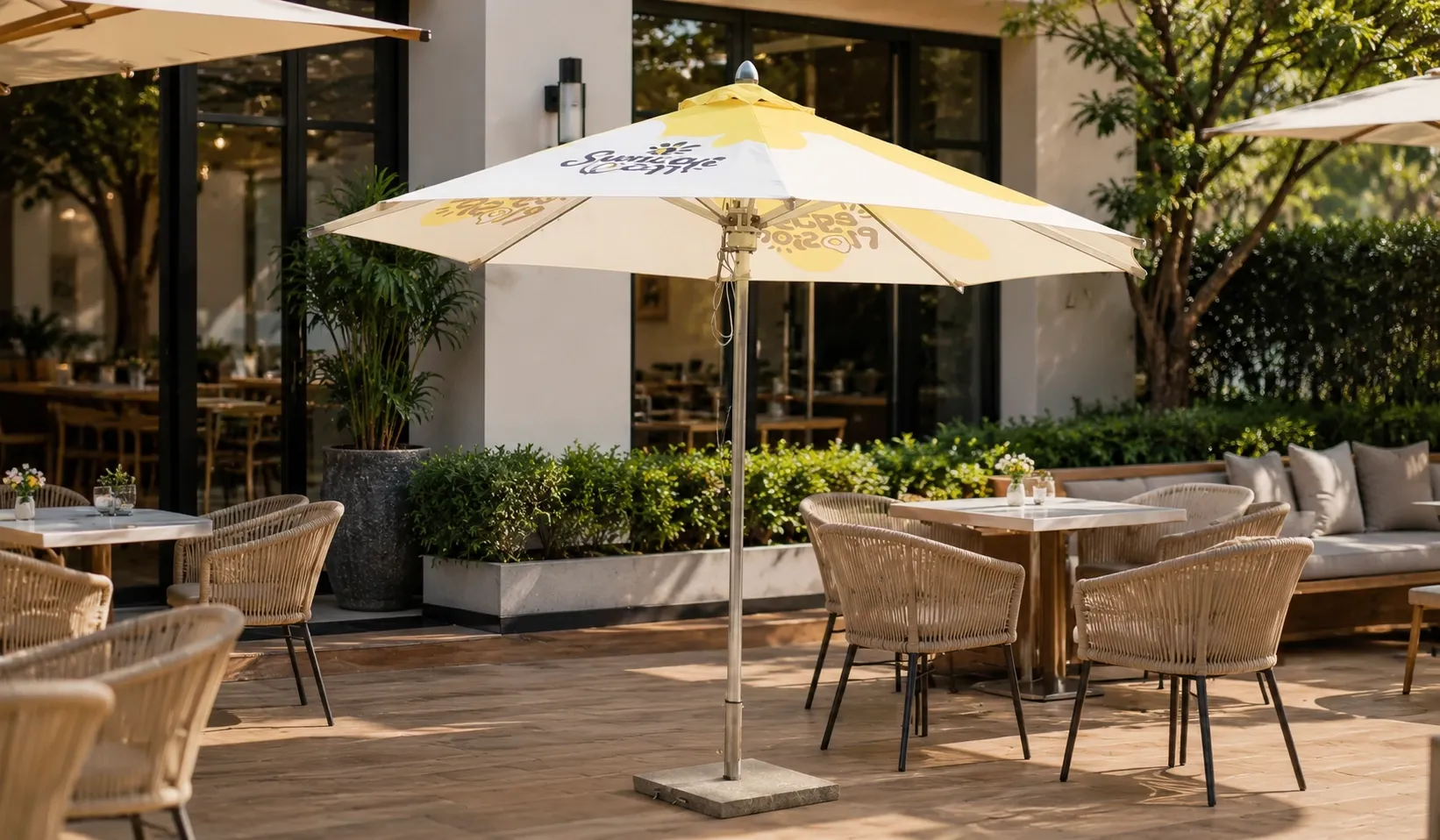
- Logo printing
- Replacement canopies
- Packaging for multi-location projects
For restaurant groups or distributors ordering repeatedly, keeping the frame, fabric reference, color, and component specifications consistent can make future replenishment easier.
Restaurant Patio Umbrella RFQ Checklist
To receive a more accurate recommendation and quotation, provide:
- Restaurant or project location
- Patio dimensions
- Table dimensions
- Number of tables
- Required umbrella quantity
- Preferred center pole, cantilever, or large umbrella
- Preferred canopy size
- Frame color or finish
- Fabric color and grade
- Logo requirements
- Base or mounting preference
- Delivery country
- Target project date
Photos or a basic floor plan are especially helpful.
Conclusion
Choosing restaurant patio umbrellas is a layout and operations decision as much as a product decision.
The umbrella should provide practical shade while fitting tables, chairs, service routes, bases, and daily staff routines.
Center pole umbrellas are often efficient for individual dining tables, cantilever umbrellas can keep the center of larger seating areas open, and large commercial umbrellas may suit wider terraces.
The best configuration depends on the actual restaurant layout.
Planning an Outdoor Restaurant or Café Project?
Send Snova Outdoor your patio dimensions or floor plan, table layout, preferred umbrella style, quantity, delivery country, and customization requirements.
We can recommend suitable restaurant patio umbrella configurations, including center pole, cantilever, large commercial umbrellas, fabrics, and compatible base options, and prepare a project-based quotation.
What size umbrella is best for a restaurant table?
The correct size depends on the table dimensions, number of seats, sun direction, and available spacing. The canopy should normally extend beyond the table rather than matching the tabletop exactly.
Are center pole or cantilever umbrellas better for restaurants?
Center pole umbrellas are often suitable for tables with umbrella holes, while cantilever umbrellas are useful when the dining area needs to remain free from a center pole.
Do restaurant patio umbrellas need a base if they go through a table?
Usually yes. The table can help control movement, but the umbrella normally still requires a compatible base underneath.
Can restaurant umbrellas be customized with a logo?
Yes. Depending on the model and fabric, logos can be added to canopy panels or valances, together with customized colors and frame finishes.