Aug 12, 2026Buying Guides
Solution-Dyed Polyester vs Solution-Dyed Acrylic for Commercial Umbrellas
Compare solution-dyed polyester vs solution-dyed acrylic for commercial umbrellas, including colorfastness, cost, feel, durability, and suitable applications.
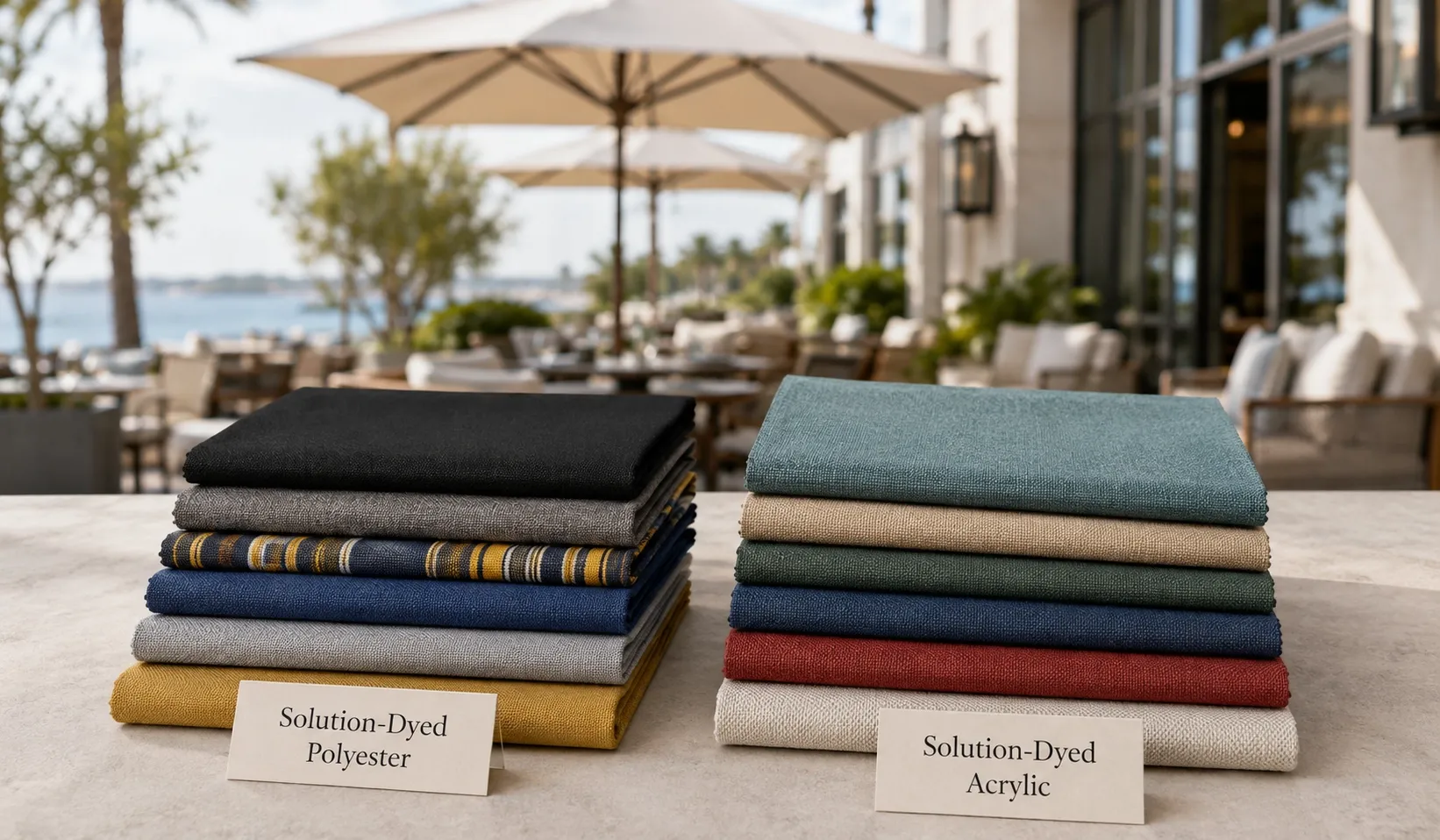
Solution-Dyed Polyester vs Solution-Dyed Acrylic for Commercial Umbrellas
When choosing fabric for a commercial outdoor umbrella, buyers often encounter two options: solution-dyed polyester and solution-dyed acrylic.
Both can be suitable for restaurants, hotels, resorts, outdoor furniture collections, and other commercial applications. However, they are not identical in price, appearance, expected outdoor performance, or target market.
For buyers, the most important point is that the fiber name alone does not determine fabric quality.
A good commercial umbrella specification should consider the dyeing method, fabric weight, UV and colorfastness performance, coating, sewing quality, project environment, replacement cycle, and budget.
This guide explains the practical differences between solution-dyed polyester and solution-dyed acrylic and how to choose between them.
Quick Answer: Which Fabric Is Better?
For many commercial umbrella projects, solution-dyed polyester offers a strong balance between cost and outdoor performance, making it suitable for distributors, restaurants, cafés, and projects where budget matters.
Solution-dyed acrylic is generally positioned as a more premium outdoor fabric option, particularly for hotels, resorts, luxury hospitality projects, and applications where long-term color appearance is an important purchasing consideration.
However, buyers should not choose only by the words “polyester” or “acrylic.”
A high-grade solution-dyed polyester can be more suitable for a particular project than a low-specification fabric of another fiber type.
The final decision should be based on the complete specification and available test information.
1. What Does “Solution-Dyed” Mean?
The term solution-dyed describes how color is introduced into the fiber.
Instead of applying color mainly to the surface of a finished fabric, pigment is incorporated during fiber production. As a result, the color is distributed through the fiber rather than existing only as a surface treatment.
For outdoor applications, this process can improve resistance to fading compared with many conventional piece-dyed fabrics.
This is why solution-dyed materials are widely used for products exposed to sunlight, including:
- Commercial patio umbrellas
- Awnings
- Outdoor furniture
- Marine applications
- Hotel and resort textiles
- Exterior shade products
But “solution-dyed” should still not be treated as a complete performance specification.
Fiber type, pigment quality, yarn construction, weave, coating, finishing, and testing all matter.
2. Solution-Dyed Polyester for Commercial Umbrellas
Solution-dyed polyester is commonly used for commercial umbrella canopies because it can provide a practical combination of appearance, performance, and price.
For many B2B buyers, it is particularly suitable when umbrellas need to remain commercially competitive while still offering better outdoor performance than basic promotional fabrics.
Common advantages include:
- Competitive cost
- Good color selection
- Suitable performance for many commercial applications
- Relatively easy handling and sewing
- Availability in different fabric weights
- Compatibility with many custom umbrella programs
For example, a 260gsm solution-dyed polyester is a common type of specification for mid-range commercial patio umbrellas.
However, GSM alone should not determine purchasing decisions. Two fabrics with the same weight may have different yarns, coatings, weave density, colorfastness, and outdoor performance.
Solution-dyed polyester can therefore be an effective choice for restaurants, furniture distributors, cafés, and hospitality projects that need a good cost-performance balance.
3. Solution-Dyed Acrylic for Premium Outdoor Projects
Solution-dyed acrylic is widely associated with premium outdoor fabric applications.
It is frequently specified for awnings, marine applications, high-end outdoor furniture, and hospitality shade products where appearance and color retention over extended outdoor exposure are important.
For commercial umbrella projects, buyers may choose acrylic when:
- The project is positioned at a premium level
- Fabric appearance is a major design consideration
- The umbrellas will be exposed outdoors for long periods
- The client requires a recognized outdoor fabric brand
- Long-term replacement consistency is important
- The project budget allows a higher fabric cost
Hotels, luxury resorts, beach clubs, villas, premium furniture brands, and architectural projects are typical applications where acrylic may be considered.
The trade-off is usually cost.
Depending on the brand, color, quantity, and specification, acrylic can increase the canopy cost considerably compared with standard commercial polyester options.
4. How Should Buyers Compare the Two?
Instead of asking only:
“Is it polyester or acrylic?”
Commercial buyers should request a more complete fabric specification.
Important factors include:
Colorfastness
Ask what colorfastness or weathering information is available for the selected fabric.
This is especially important for dark blue, red, black, green, and other colors where visible fading may affect the appearance of a hospitality project.
Fabric Weight
Fabric weight is normally expressed in GSM, or grams per square meter.
A higher GSM may provide a heavier feel, but it does not automatically mean better UV resistance, color retention, or longer service life.
UV Performance
If UPF or other UV-performance claims are important to the project, request the applicable test information for the exact fabric.
Do not assume that every polyester or acrylic fabric has the same UV rating.
Water Resistance
Commercial umbrella fabrics are commonly designed to resist normal outdoor moisture, but water resistance and waterproofing are not the same.
Coatings, seams, canopy pitch, vents, and sewing construction all affect how the completed canopy performs in rain.
Feel and Appearance
A premium hospitality project may place more emphasis on fabric texture, drape, color depth, and overall visual quality than a price-sensitive wholesale program.
Physical fabric swatches are useful before approving large orders.
5. Which Fabric Should You Choose?
There is no universal answer.
For a restaurant chain, outdoor furniture distributor, or commercial project working within a defined budget, solution-dyed polyester may provide the more practical specification.
For a luxury hotel, premium resort, beach club, or design-led hospitality project where long-term appearance has greater value, solution-dyed acrylic may justify the additional cost.
A useful buying approach is to define three factors first:
- Expected project positioning
- Outdoor exposure and required service life
- Target budget
Then compare actual fabric samples and specifications within those requirements.
Commercial buyers should also consider replacement canopies. If the umbrella frame is designed for long-term use, being able to replace the fabric rather than the complete umbrella can improve lifecycle value.
Commercial Umbrella Fabric Buyer Checklist
Before approving a canopy fabric, confirm:
- Fiber type
- Dyeing method
- Fabric weight
- Available colorfastness information
- UV or UPF information where required
- Water-resistant treatment
- Fabric color
- Physical swatch approval
- Logo-printing compatibility
- Seam and edge construction
- Replacement canopy availability
- Minimum order quantity
- Lead time
- Project budget
The best commercial umbrella fabric is not simply the most expensive option. It is the fabric that matches the project’s expected outdoor exposure, visual standard, replacement cycle, and budget.
Conclusion
Solution-dyed polyester and solution-dyed acrylic can both be suitable for commercial outdoor umbrellas.
Solution-dyed polyester is often selected for its balance of cost, customization, and commercial outdoor performance, while solution-dyed acrylic is commonly considered for more premium projects where long-term appearance and higher fabric specifications are priorities.
The correct choice should be based on the actual fabric specification rather than fiber name alone.
Planning a Commercial Outdoor Shade Project?
Send Snova Outdoor your umbrella type, canopy size, quantity, application, delivery country, preferred fabric level, color, and branding requirements.
We can recommend suitable solution-dyed polyester or acrylic fabric options together with center pole, cantilever, and large commercial umbrella configurations for your project.